

Looking for a professional pest control company to manage your Environmental Land Management processes? AgriPest can oversee the whole process from initial wildlife surveys to control programs.
What is ELM?
Environmental Land Management (ELM) is a program in the United Kingdom designed to provide financial incentives to farmers and land managers for implementing environmentally beneficial practices on their land. It is part of the government’s efforts to support sustainable agriculture, biodiversity conservation, and climate change mitigation.
ELM replaces the previous subsidy system known as the Basic Payment Scheme (BPS), which primarily rewarded farmers based on the amount of land they owned. Instead, ELM aims to reward farmers for delivering specific environmental outcomes, such as improving soil health, enhancing biodiversity, managing water resources effectively, and mitigating climate change impacts.
Under the ELM scheme, farmers and land managers can receive payments for actions such as planting trees, creating wildlife habitats, restoring peatlands, and adopting sustainable farming practices. The payments are structured to incentivise long-term environmental stewardship and encourage farmers to adopt more sustainable land management practices.
The ELM scheme is expected to play a significant role in helping the UK meet its environmental goals, including targets for carbon reduction, biodiversity conservation, and sustainable land use. By rewarding farmers for environmental stewardship, the program aims to promote the integration of agricultural production with environmental conservation and resilience.
WS1 example
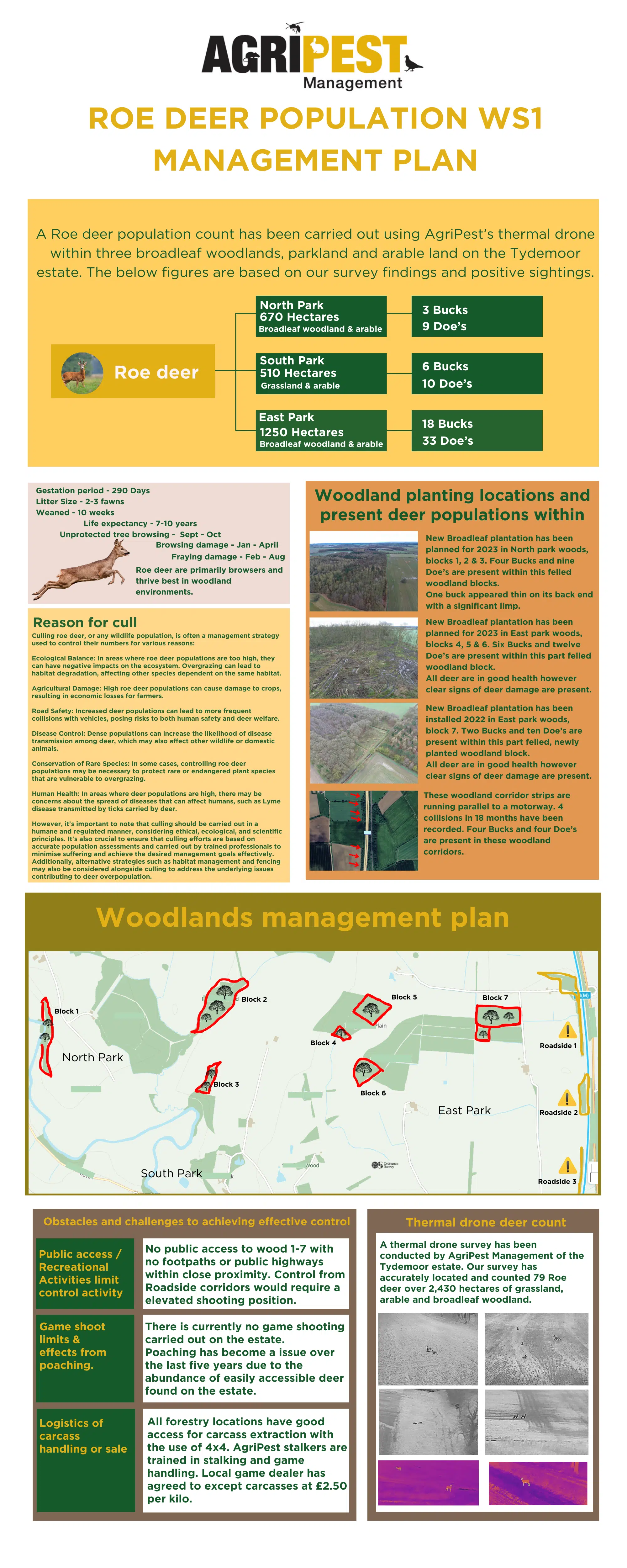
What is WS1 Deer control and management?
“WS1 Deer control and management” Refers to a specific aspect or component within the Environmental Land Management (ELM) scheme, focusing on the control and management of deer populations in the United Kingdom.
Deer can have significant impacts on ecosystems, biodiversity, and agriculture when their populations are not properly managed. In many areas, deer populations have increased due to changes in land use, habitat fragmentation, and reduced predation pressure. As a result, deer overpopulation can lead to habitat degradation, damage to crops and woodlands, and conflicts with human activities.
Within the ELM scheme or other land management programs, WS1 Deer control and management involves various strategies aimed at managing deer populations to mitigate their impacts. These strategies could include:
- Culling: Controlled culling of deer populations may be necessary to reduce their numbers to sustainable levels. This can involve selective culling of specific age or sex classes to achieve desired population targets.
- Habitat management: Improving habitat quality and connectivity can help reduce the impacts of deer browsing and trampling. This may involve habitat restoration, creating deer enclosures to protect sensitive areas, and planting deer-resistant species.
- Fencing: Installing fencing around sensitive areas such as woodlands, agricultural crops, or reforestation sites can help prevent deer damage and limit their access to vulnerable habitats.
- Monitoring: Regular monitoring of deer populations and their impacts is essential for effective management. This may involve population surveys, tracking deer movements using GPS collars, and assessing vegetation health and regeneration.
- Collaboration: Effective deer management often requires collaboration between landowners, managers, conservation organisations, and other stakeholders. Sharing resources, knowledge, and best practices can help achieve more sustainable outcomes.
By implementing WS1 Deer control and management practices, landowners and managers can help protect biodiversity, conserve habitats, and ensure the long-term sustainability of ecosystems affected by deer populations.
Please visit the link below to check eligibility and funding options:
https://www.gov.uk/countryside-stewardship-grants/ws1-deer-control-and-management
WS3 example

What is WS3 Squirrel control and management?
ELM Environmental Land Management “WS3: Squirrel control and management” is a specific aspect or component within the Environmental Land Management (ELM) scheme in the United Kingdom, focusing on the control and management of squirrel populations.
Squirrels, particularly non-native invasive species like the grey squirrel in the UK, can have significant impacts on biodiversity, forestry, and agricultural activities. Therefore, managing squirrel populations is often necessary to mitigate these impacts and protect native species and ecosystems.
Within the ELM scheme, WS3 Squirrel control and management involves various strategies aimed at managing squirrel populations effectively. These strategies could include:
- Trapping: Trapping is a common method used to control squirrel populations. Live traps can be employed to capture squirrels without causing harm, allowing for their relocation to more suitable habitats or humane euthanasia.
- Shooting: In some cases, shooting may be permitted as a method of population control, particularly in areas where squirrels are causing significant damage to forestry or agricultural crops. This method is often regulated and may require licenses or permits.
- Habitat modification: Modifying habitat features to make them less suitable for squirrels can help reduce population densities. This may involve removing or modifying food sources, such as bird feeders, and creating barriers or deterrents to prevent access to sensitive areas.
- Monitoring: Regular monitoring of squirrel populations and their impacts is essential for effective management. This may involve population surveys, tracking squirrel movements using GPS collars, and assessing damage to vegetation and infrastructure.
By implementing WS3 Squirrel control and management practices, landowners and managers can help mitigate the negative impacts of squirrel populations on biodiversity, forestry, and agriculture while promoting the conservation of native species and ecosystems.
Please visit the link below to check eligibility and funding options:
https://www.gov.uk/countryside-stewardship-grants/ws3-squirrel-control-and-management
Initial WS1 & WS3 surveys
Surveys are essential tools for ELM eligibility but also evidence-based decision-making in environmental land management, helping to inform policy development, prioritise conservation actions, and allocate resources effectively. They provide valuable data for designing and implementing sustainable land management practices that support biodiversity conservation, soil health, water quality, and ecosystem resilience.
AgriPest Management have the tools and equipment to conduct both ground and aerial population counts, sex identification and control strategies.
Once a survey has been completed and funding has been granted AgriPest Management can manage and the control processes while continually monitoring population levels and documenting our treatment progress allowing funding to continue.