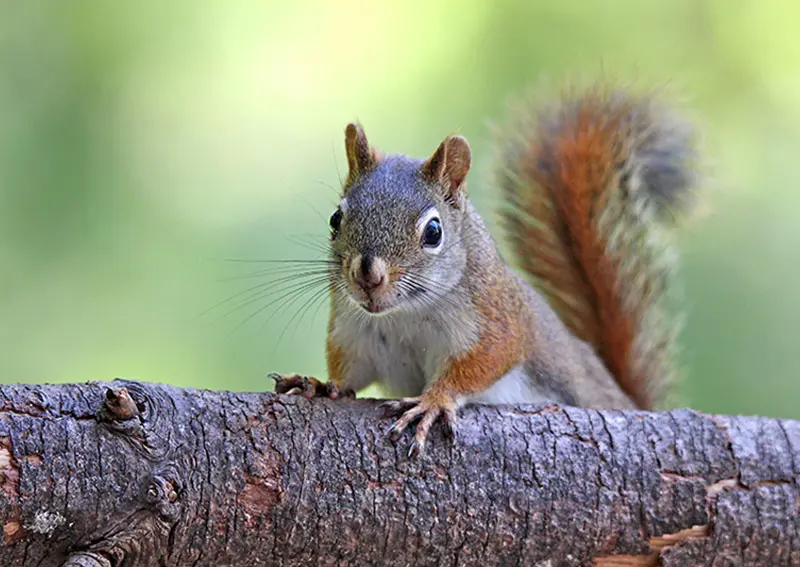
Squirrel Control in Yorkshire
On medium to large estates it is easy for pest species to gain a foothold. Squirrels are no different and will take full advantage of what estates have to offer.
Squirrels are adept at stripping tree bark. They tend to carry this out between the months of April to July. This will often result in mature trees losing limbs or completely dying off. This can have costly consequences for the trees that are to be harvested. Many estates will also have arboretums, significantly aged trees and woodland areas that are at risk of squirrel damage.
The non-indigenous grey squirrel is renowned for pushing out the red squirrel due to its dominance within the woodlands and its ability to carry squirrel pox.
Grey squirrels will feed and forage on fallen seeds from naturally regenerating trees and shrubs, this can have an effect on growth structure and the diversity of the woodland itself.
Squirrels can be instrumental in the decline of nesting birds and their eggs due to food competition in the local area.
Squirrels are known for feeding from and damaging pheasant feeders. This may have wider implications for the birds you are trying to rear in the surrounding area.
The use of warfarin (squirrel poison) is now banned. Agripest are specialists in the use of live catch traps, snares and various other techniques. Sourcing a professional company with solid expertise in this area will ensure trees and local wildlife remain protected. This will save on costly future interventions and safeguard the estate environment.
The use of warfarin is now banned, so many forestry based industries will be forced to employ four people to set traps as opposed to just one for laying poison.
The installation, checking, moving and replacing of traps is a costly and time-consuming process. It is imperative that the team undertaking the project is efficient and experienced as this will determine the speed, results and cost of the cull.
We provide a live catch alternative for sensitive areas or locations that may also contain a red squirrel population.
Depending on where you are in the UK the squirrel population might provide a source of income. Many people enjoy watching both red and grey squirrels in their local parks for example but remain unaware of the damage they may be causing above their heads.
Squirrels are expert bark strippers. This can cause trees and branches to die back, posing a serious risk to the public below. Squirrels can also be a source of leptospirosis and salmonella.
Squirrels will also forage from bins, both open and closed. They are renowned for stealing food from the public and causing serious damage to authority buildings.
Squirrels dig and forage for nuts and seeds. This can reduce the success of woodland regeneration and prove deadly to woodland areas and forestry in the long term.
AgriPest understands the importance of safety and the need for discretion in sensitive areas. We have highly qualified and experienced staff, the right equipment and project management structures to ensure the swift and efficient completion of every job.
What is ELM?
Environmental Land Management (ELM) is a program in the United Kingdom designed to provide financial incentives to farmers and land managers for implementing environmentally beneficial practices on their land. It is part of the government’s efforts to support sustainable agriculture, biodiversity conservation, and climate change mitigation.
ELM replaces the previous subsidy system known as the Basic Payment Scheme (BPS), which primarily rewarded farmers based on the amount of land they owned. Instead, ELM aims to reward farmers for delivering specific environmental outcomes, such as improving soil health, enhancing biodiversity, managing water resources effectively, and mitigating climate change impacts.
Under the ELM scheme, farmers and land managers can receive payments for actions such as planting trees, creating wildlife habitats, restoring peatlands, and adopting sustainable farming practices. The payments are structured to incentivise long-term environmental stewardship and encourage farmers to adopt more sustainable land management practices.
The ELM scheme is expected to play a significant role in helping the UK meet its environmental goals, including targets for carbon reduction, biodiversity conservation, and sustainable land use. By rewarding farmers for environmental stewardship, the program aims to promote the integration of agricultural production with environmental conservation and resilience.
WS3 example

What is WS3 Squirrel control and management?
ELM Environmental Land Management “WS3: Squirrel control and management” is a specific aspect or component within the Environmental Land Management (ELM) scheme in the United Kingdom, focusing on the control and management of squirrel populations.
Squirrels, particularly non-native invasive species like the grey squirrel in the UK, can have significant impacts on biodiversity, forestry, and agricultural activities. Therefore, managing squirrel populations is often necessary to mitigate these impacts and protect native species and ecosystems.
Within the ELM scheme, WS3 Squirrel control and management involves various strategies aimed at managing squirrel populations effectively. These strategies could include:
- Trapping: Trapping is a common method used to control squirrel populations. Live traps can be employed to capture squirrels without causing harm, allowing for their relocation to more suitable habitats or humane euthanasia.
- Shooting: In some cases, shooting may be permitted as a method of population control, particularly in areas where squirrels are causing significant damage to forestry or agricultural crops. This method is often regulated and may require licenses or permits.
- Habitat modification: Modifying habitat features to make them less suitable for squirrels can help reduce population densities. This may involve removing or modifying food sources, such as bird feeders, and creating barriers or deterrents to prevent access to sensitive areas.
- Monitoring: Regular monitoring of squirrel populations and their impacts is essential for effective management. This may involve population surveys, tracking squirrel movements using GPS collars, and assessing damage to vegetation and infrastructure.
By implementing WS3 Squirrel control and management practices, landowners and managers can help mitigate the negative impacts of squirrel populations on biodiversity, forestry, and agriculture while promoting the conservation of native species and ecosystems.
Please visit the link below to check eligibility and funding options:
https://www.gov.uk/countryside-stewardship-grants/ws3-squirrel-control-and-management
Initial WS3 surveys
Surveys are essential tools for ELM eligibility but also evidence-based decision-making in environmental land management, helping to inform policy development, prioritise conservation actions, and allocate resources effectively. They provide valuable data for designing and implementing sustainable land management practices that support biodiversity conservation, soil health, water quality, and ecosystem resilience.
AgriPest Management have the tools and equipment to conduct both ground and aerial population counts, sex identification and control strategies.
Once a survey has been completed and funding has been granted AgriPest Management can manage and the control processes while continually monitoring population levels and documenting our treatment progress allowing funding to continue.
To read more Click Here