National Deer Management
AgriPest Management are the UK’s award-winning specialists in large pest management. Our small team of qualified specialists carry out management and control on all of the UK’s six deer species as well as wild boar.
It is important to seek the services of trained specialists when dealing with deer control. AgriPest offers environmental management solutions, controlled strategies, deer fencing and population counts. AgriPest’s small team of specialists are fully insured and DSC qualified.
Here at Agripest we offer an experienced and professional deer management service. We are fully equipped to carry out deer management in any setting such as:
-Agricultural
-Estate/Parkland
-Woodland/Forestry
Why do we carry out deer management?
When deer overpopulate an area they can have a negative impact on plants, trees and other wildlife, as well as causing damage to fencing and in some cases dry stone walling. It is therefore important that the population of deer is managed by a professional to keep the numbers of deer at a sensible amount for a particular area.
Deer management is also important for keeping a population of deer healthy. Unhealthy and injured deer can be identified and culled to prevent suffering. Poor conditioned does and hinds can be identified and culled to ensure a healthy population of breeding females. Poor condition bucks and stags can be identified and culled to ensure that only the healthy, good condition bucks/stags with desirable heads are passing on their genes to the next generation of deer. Murder bucks can be culled to ensure they can cause no damage to other deer. Deer can be observed, and cull plans made up depending on the requirements of the landowner.
Deer can be removed from areas of land where they are causing large amounts of damage, in turn affecting peoples livelihoods such as in agricultural settings, orchards/fruit growers, Christmas tree growers, plant/tree nurseries and forestry plots.
Here at Agripest, we can offer a professional deer management service at competitive prices, to cater for your individual needs. Any culled deer will be dealt with professionally and humanely, with the respect that they deserve. We take all carcasses to go into the food chain, or for our own personal consumption unless the landowner requires the carcasses for themselves.
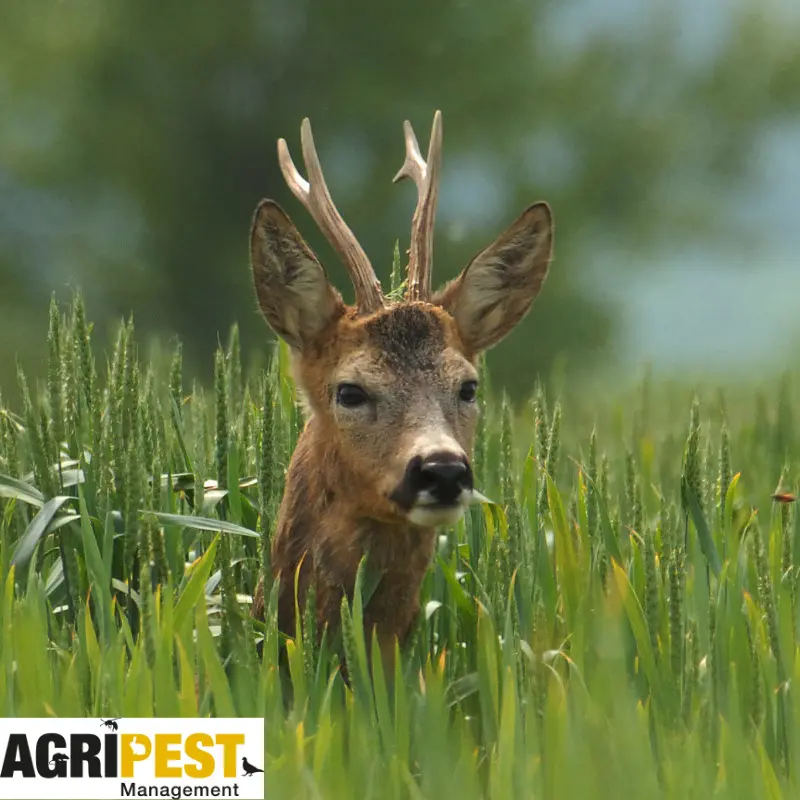
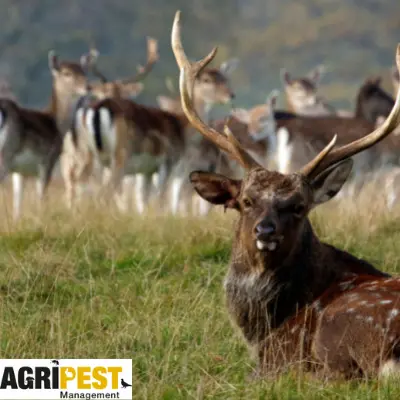
We are based in North Yorkshire, therefore the main species we deal with is Roe deer, however, we will travel if required and are able to carry out deer management for the other 5 UK deer species; Fallow deer, Red deer, Sika deer, Chinese water deer and Reeves muntjac.
What is ELM?
Environmental Land Management (ELM) is a program in the United Kingdom designed to provide financial incentives to farmers and land managers for implementing environmentally beneficial practices on their land. It is part of the government’s efforts to support sustainable agriculture, biodiversity conservation, and climate change mitigation.
ELM replaces the previous subsidy system known as the Basic Payment Scheme (BPS), which primarily rewarded farmers based on the amount of land they owned. Instead, ELM aims to reward farmers for delivering specific environmental outcomes, such as improving soil health, enhancing biodiversity, managing water resources effectively, and mitigating climate change impacts.
Under the ELM scheme, farmers and land managers can receive payments for actions such as planting trees, creating wildlife habitats, restoring peatlands, and adopting sustainable farming practices. The payments are structured to incentivise long-term environmental stewardship and encourage farmers to adopt more sustainable land management practices.
The ELM scheme is expected to play a significant role in helping the UK meet its environmental goals, including targets for carbon reduction, biodiversity conservation, and sustainable land use. By rewarding farmers for environmental stewardship, the program aims to promote the integration of agricultural production with environmental conservation and resilience.
WS1 example
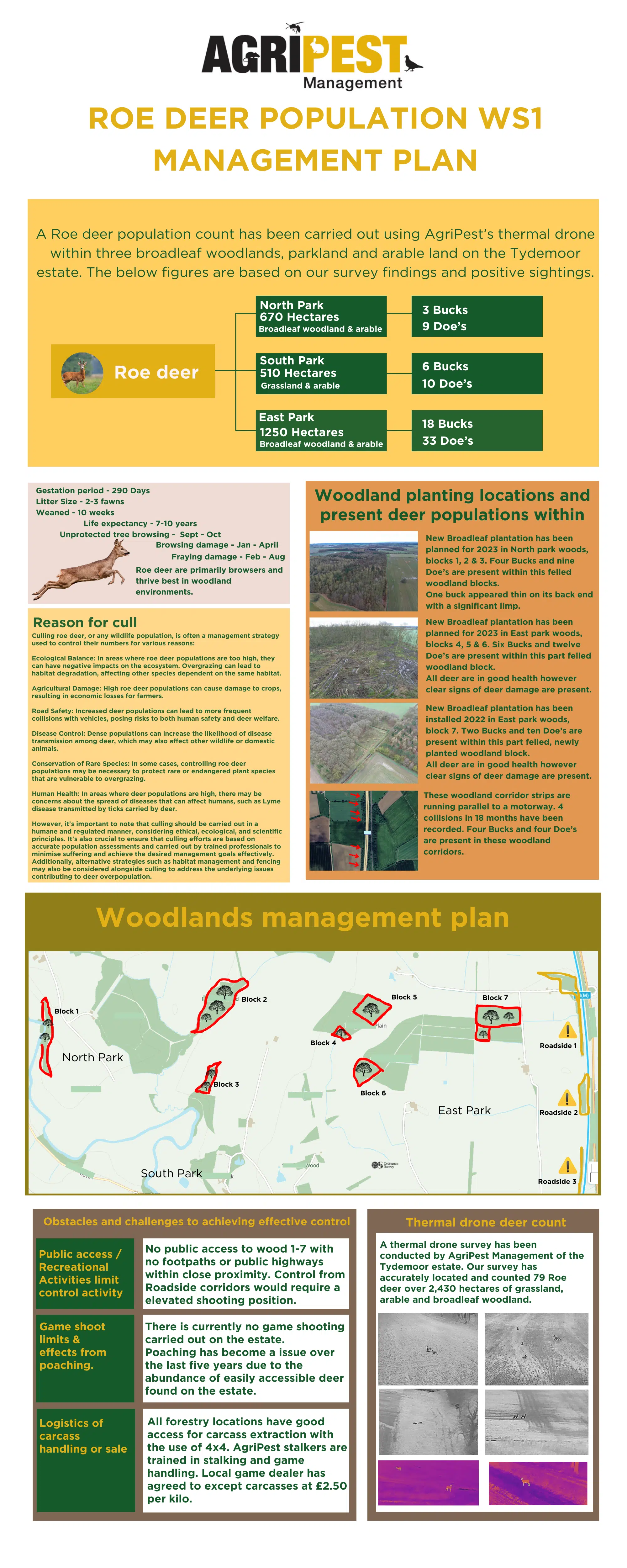
What is WS1 Deer control and management?
“WS1 Deer control and management” Refers to a specific aspect or component within the Environmental Land Management (ELM) scheme, focusing on the control and management of deer populations in the United Kingdom.
Deer can have significant impacts on ecosystems, biodiversity, and agriculture when their populations are not properly managed. In many areas, deer populations have increased due to changes in land use, habitat fragmentation, and reduced predation pressure. As a result, deer overpopulation can lead to habitat degradation, damage to crops and woodlands, and conflicts with human activities.
Within the ELM scheme or other land management programs, WS1 Deer control and management involves various strategies aimed at managing deer populations to mitigate their impacts. These strategies could include:
- Culling: Controlled culling of deer populations may be necessary to reduce their numbers to sustainable levels. This can involve selective culling of specific age or sex classes to achieve desired population targets.
- Habitat management: Improving habitat quality and connectivity can help reduce the impacts of deer browsing and trampling. This may involve habitat restoration, creating deer enclosures to protect sensitive areas, and planting deer-resistant species.
- Fencing: Installing fencing around sensitive areas such as woodlands, agricultural crops, or reforestation sites can help prevent deer damage and limit their access to vulnerable habitats.
- Monitoring: Regular monitoring of deer populations and their impacts is essential for effective management. This may involve population surveys, tracking deer movements using GPS collars, and assessing vegetation health and regeneration.
- Collaboration: Effective deer management often requires collaboration between landowners, managers, conservation organisations, and other stakeholders. Sharing resources, knowledge, and best practices can help achieve more sustainable outcomes.
By implementing WS1 Deer control and management practices, landowners and managers can help protect biodiversity, conserve habitats, and ensure the long-term sustainability of ecosystems affected by deer populations.
Please visit the link below to check eligibility and funding options:
https://www.gov.uk/countryside-stewardship-grants/ws1-deer-control-and-management
Initial WS1 surveys
Surveys are essential tools for ELM eligibility but also evidence-based decision-making in environmental land management, helping to inform policy development, prioritise conservation actions, and allocate resources effectively. They provide valuable data for designing and implementing sustainable land management practices that support biodiversity conservation, soil health, water quality, and ecosystem resilience.
AgriPest Management have the tools and equipment to conduct both ground and aerial population counts, sex identification and control strategies.
Once a survey has been completed and funding has been granted AgriPest Management can manage and the control processes while continually monitoring population levels and documenting our treatment progress allowing funding to continue.
To read more Click Here
AgriPest take a look at why deer numbers are on the rise when there is a push to reduce the numbers nationally and give our opinion as to how we can successfully manage deer numbers throughout the UK.
AgriPest specilise in rural pest management, we manage the pest control procedures on many estates and farms that all have varying numbers and species of deer.
The first thing we need to look at is why we need to control more deer? The UK is looking to become net zero by 2050, to achieve this target there is a national push to plant more trees throughout the UK to catch more carbon however, if we are successful in planting millions more trees we are now creating additional habitats for deer to occupy and thrive.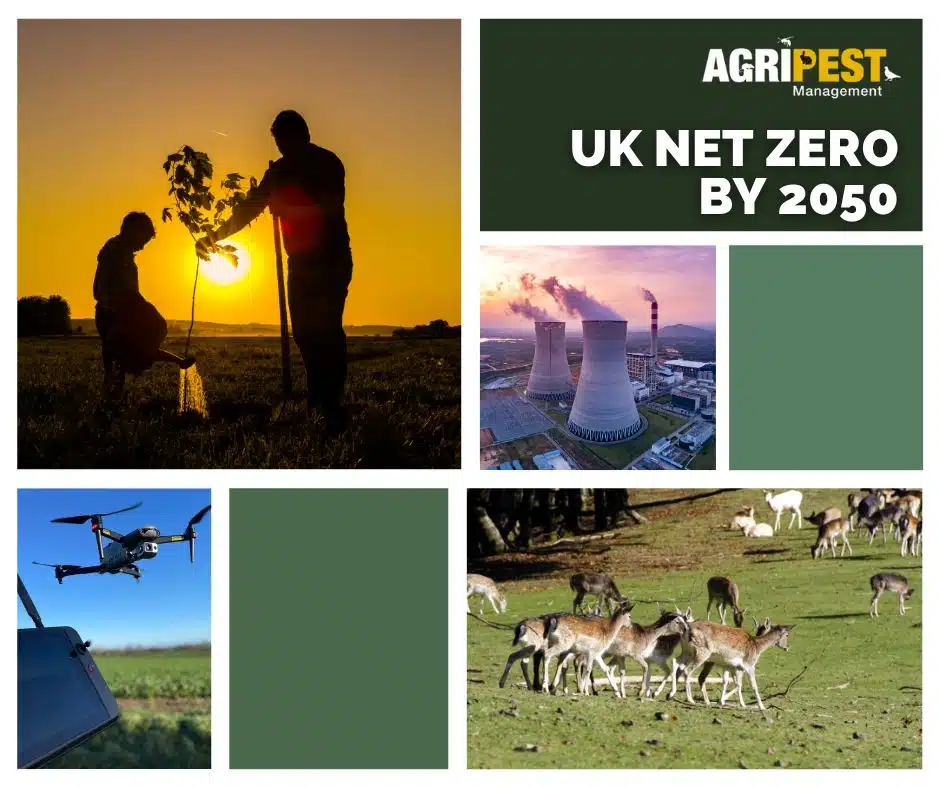
Agriculture is also another key factor in managing deer populations, farmers in the UK are facing unprecedented challenges, rising costs, weather and global demand for products, deer amongst other pest species are just other issue taking the hard earned profits out of the farmers pockets by damaging or consuming crops.
When the subject of deer comes up in conversation the common response is ‘we only have 1 or 2’ or ‘we have someone that comes and takes the odd one for the pot’. This is an all-to-common theme when it comes to deer control over smaller parcels of land.
For the larger estates we often find that it is the gamekeeper’s responsibility to manage the deer numbers, this can often be one keeper managing 2,000, 3,000, 4,000 acres of land. When speaking to the gamekeepers we learn they either do not have the time to effectively manage the numbers or they struggle for carcass outlets. Although the gamekeepers are up against it, they are very reluctant to allow others onto the land to help control rising deer numbers.
In the 70’s and 80’s obtaining shooting permission on land was a fairly easy undertaking, a knock on the farmers door or a polite letter would often see permission granted, these days it is very different with landowners very reluctant in allowing anyone on to control any pest species.
If you are lucky enough to have some good stalking ground with a landowner that understands the importance of deer management the next issue is an outlet for the deer you shoot. Many hobbyist shooters on the smaller parcels of land will only shoot what they will use themselves. This seems like a sustainable form of pest management but unfortunately is not helping to manage the deer population.
We also see a lack of coordination between landowners, one landowner may be keen to manage the deer on his/her land however the neighbouring landowner refuses to entertain the idea of controlling deer, as any stalker will tell you… land boundaries can be a nightmare!
Leased land for stalking, this is when a parcel of land is let out for deer stalking, on the face of it this seems a practical choice as the landowner and lease holder receive an additional form of income while individuals that wouldn’t otherwise get the opportunity to stalk now have endless opportunities (for a fee). For leased stalking to work however, there must be a plentiful supply of deer on the ground all year round as paying guests expect to shoot on their days stalking, therefore the landowner and lease holder closely manage the deer populations to ensure there is a plentiful supply rather than culling in higher volumes which is going to be required to meet land management targets.
So, we now need to look to why there are very few commercial stalkers conducting national culls to aid in the reduction of deer numbers throughout the UK.
The simple answer is money! For any business to succeed there needs to be a profitable outcome and unfortunately with deer control there is very little (if any) profit to be made. A stalkers reward is often the carcass but with record low venison prices, cost of fuel, ammunition, equipment and wages it makes controlling wild deer a hobbyist’s activity rather than a commercial one which is ultimately what is needed if we are to gain control of deer numbers.
To gain control of any pest population you first need to understand the severity of the infestation, to understand the density of any pest population you need to acquire accurate population statistics, failure to gather these figures will prevent you from knowing how successful your treatments/culls have been. Therefore, to get a grip on deer numbers we first need to know how many deer we are dealing with and the species. These surveys need doing one zone at a time. We know some deer species roam so conducting a deer count over a 1,000 acre plot of land then using the results to estimate a regional population just won’t work and will only muddy the waters further.
In our opinion the way to effectively control deer is to survey a parcel of land utilising the best technology available to us, in this instance thermal drones have revolutionised the way we can accurately record deer numbers, once an accurate population figure has been recorded there needs to be a intensive cull, the cull must be carried out in a way that will significantly reduce the recorded population within a short period of time. During the cull process regular monitoring of population densities is a must to ensure you are or have achieved the desired results. Before any cull begins there must be a guaranteed recipient of the venison.
For any commercial wild deer culls there must be financial benefits for the business that is organising and conducting the cull. For anyone that has conducted culls in the past, you will know how labour intensive this process can be and the work that goes on behind the scenes, pulling the trigger is the easy part!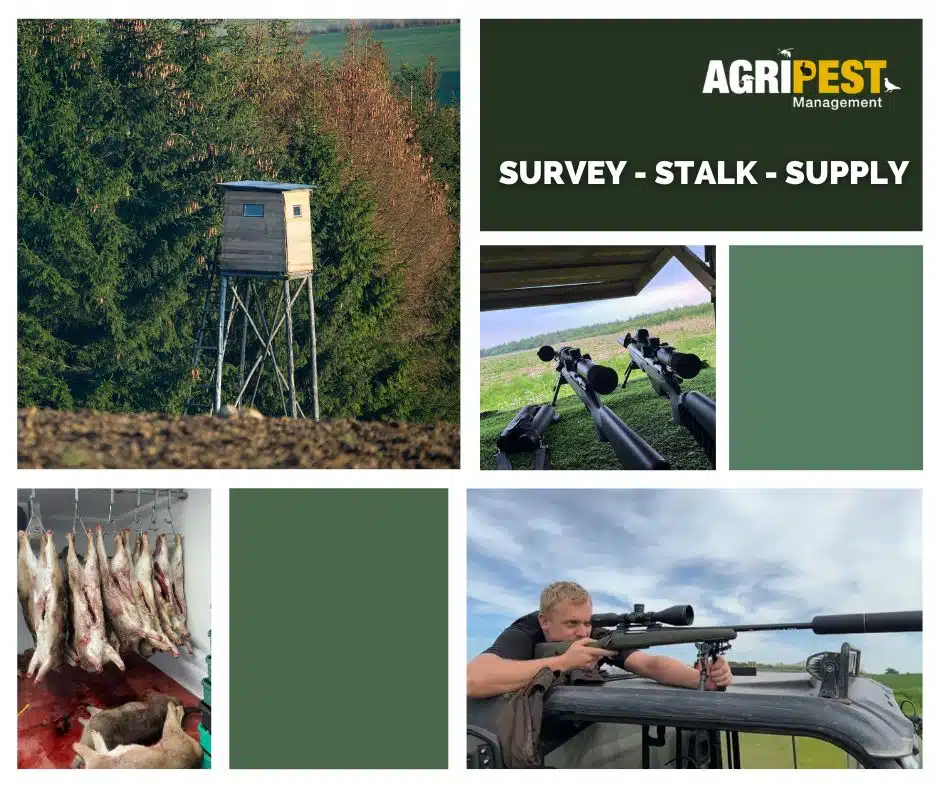
Government grants are now available offering landowners up to £200 per hectare to control deer numbers, is this enough to gain absolute control over the UK’s deer population? This is yet to be seen. More information can be found on the link below.
https://agripestmanagement.co.uk/general-news/environmental-land-management-ws1-ws3/
AgriPest Management have spent the last 2 years utlising thermal technology (including drones) to accurately count and record deer numbers on varying parcels of land, we have combined these surveys with organised culls and ensure all the usable venison has reached the consumer food market. Our results have been staggering and prove that if deer management is conducted swiftly and effectively, we CAN gain control over the ballooning deer population.
No two parcels of land are the same, each will present varying challenges which require experience and determination to overcome. This experience will come at a cost, but we see no point in planting millions of trees if they are only to be consumed by deer.
To read more Click Here