Pest Management Case Study
Introduction
AgriPest Management have recently taken on the pest management contract for a large country estate located in North Yorkshire. The estate consists of roughly 200 acres of well-maintained parkland and gardens, 350 acres of woodland, 600 acres of farmed arable land as well as a large lake and several smaller wild ponds.
Because of the nature of the estate and its natural features, it is a perfect place for wildlife to thrive. The lake and ponds are home to a variety of different wading birds such as oyster catchers, snipe and curlew as well as a number of waterfowl species such as mallard, teal, mute swan, as well as graylag and Canada geese.
The woodland areas are teaming with many different species of wild birds such as blackbird, bluetit, coaltit bullfinch, chaffinch as well as many more. Pheasant and partridge also frequent this habitat, as well as birds of prey such as buzzard, sparrowhawk, and tawny and barn owl. Mammals living in the woodland include rabbit, hedgehog, squirrel, fox, and a healthy population of roe deer.
The estates parkland is also home to a variety of different mammals. We have noticed a very healthy population of brown hares, as well as a large and well-established population of rabbits. The grassland areas are also patrolled from above by a population of red kites who pick up any carrion in the area.
Rabbit control
The first time AgriPest had a look around the estate, it was clear that the rabbit population urgently needed controlling due to the large amount of damage they have been causing in the parkland and the grounds of the estate. We noticed a large amount of well-established rabbit warrens in various areas around the estate and it was clear that the population had not been properly managed for some time. Aside from the digging damage caused by the rabbits excavating their warrens, they had also been causing damage in other areas. They had damaged many plants and young trees around the property, as well as digging up hundreds of newly planted bulbs in various areas around the estates grounds, all amounting to hundreds, if not thousands of pounds worth of damage.
After hearing about the damage the rabbits had been causing and then seeing it for ourselves, we knew rabbit control had to be one of our first priorities of pest management at the Hall. We decided it would first be a good idea to come at night with the rifles to see what sort of numbers of rabbits we were dealing with as you don’t always get a good idea of how many are about during the day as the rabbits are more likely to be down their warrens, especially with the human activity that is going on at the estate during the day.
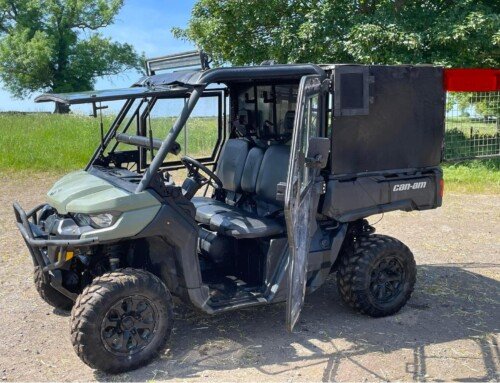
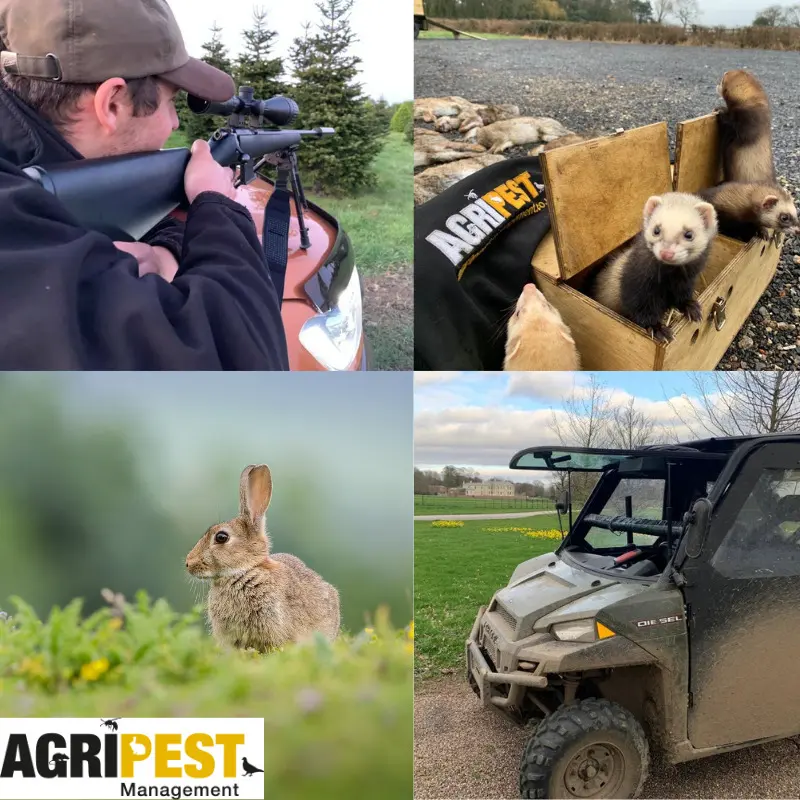
After 17:00pm the estate workers such as the groundskeepers and gardeners would be finished for the day and the grounds of the estate would be completely empty and a lot quieter, and this would be the best and safest time for us to head out with the rifles and have a look at what sort of numbers of rabbits we were dealing with. The first evening we arrived at the estate just after 17:00 and set out on the Polaris (an all-terrain vehicle) looking for rabbits. We opted to take the 22LR rifle with a moderator, shooting sub-sonic ammunition to keep noise to a minimum. We also took a lamp with a red filter on for shooting after dark, as this would be less likely to spook the rabbits, however we also took night vision with us just in case some of the rabbits happened to be lamp shy.
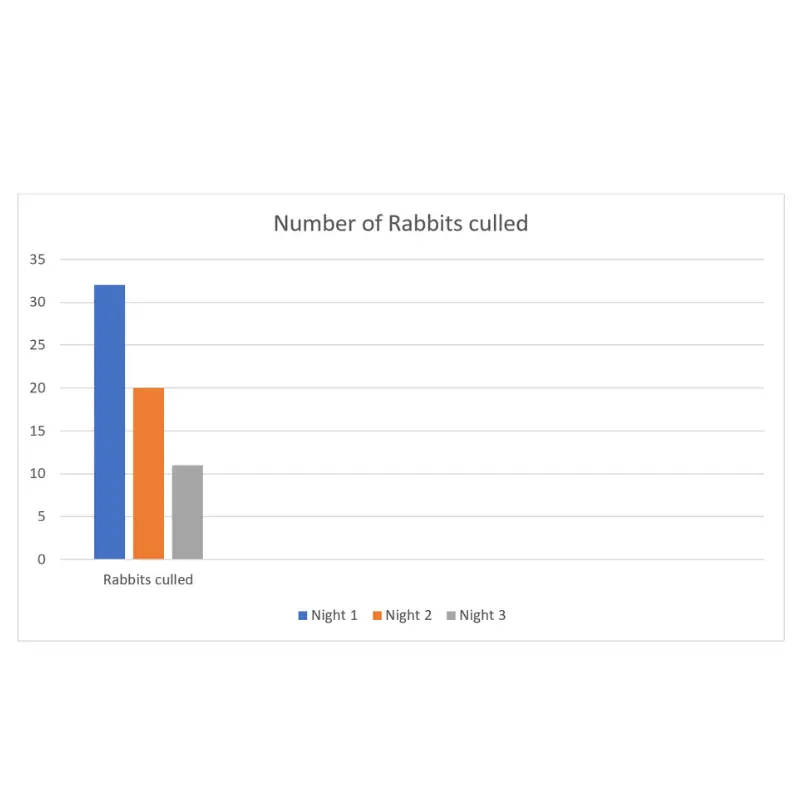
On the first night we had seen a substantial amount of rabbits. We managed to shoot 32 rabbits which we were happy with for the first visit as it was a good start and a reduction in their numbers, it also gave us an insight into the amount of rabbits we were dealing with, and although shooting 32 rabbits would have an impact on their numbers, we knew there was more to go at, so we planned to return a few nights later to have another go at them.
After a few days had passed, we returned to the estate to have another shoot and cull some more rabbits. After arriving we soon realized that weather conditions were not in our favor as it was windy, and this is not ideal for shooting rim fire rifles as the accuracy of the rifles can be impacted by the wind. We took this into account and knew that we would more than likely have to get a little bit closer to the rabbits to make our shots count in the wind. This time we noticed a decrease in the number of rabbits we were seeing, however we still saw a substantial amount and managed to dispatch another 20 rabbits with the rifle, taking our total up to 52 rabbits for the two visits.
After the second visit shooting rabbits, we noticed a huge decrease in the numbers we were seeing both in the day and at night which we were happy with, however we were still seeing some so we decided to give the rabbits a break for a week and return the week after for another look out with the rifle to see if we could cull anymore. This time it was a bit harder as rabbits were now few and far between, however we managed to shoot another 11 rabbits taking our total up to 63 rabbits culled over 3 trips out.
Grey squirrel control
As well as carrying out rabbit control on the estate, AgriPest were also asked to control the number of grey squirrels in the area, as the population had got quite large due to not being controlled previously. The squirrels had been causing quite a lot of damage in certain areas around the estate. They had caused damage to several trees, as well as digging up newly planted bulbs in the parkland and gardens. Aside from this, grey squirrels are an invasive species that should be controlled wherever possible. First, we had a ride around the estate and noted down the areas where we had seen both squirrel damage and also areas where we had spotted squirrels moving around, as well as noting down where we had seen squirrel dreys.
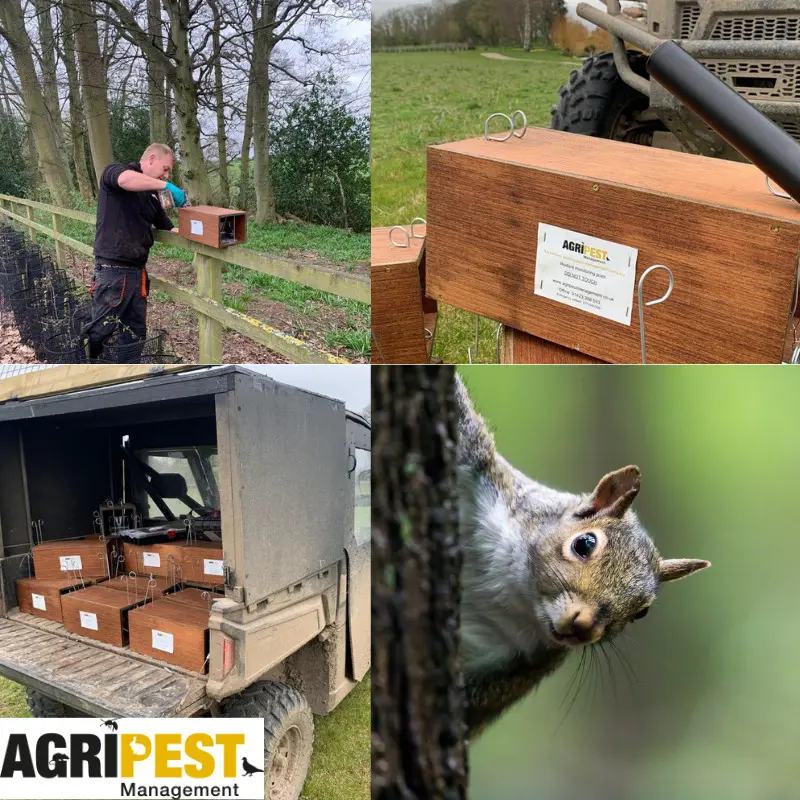
Next, we put together some squirrel trapping boxes, starting with 20 boxes as we thought that was a good number of traps to start with for the areas we were going to trap. We could always add more, or reduces the amount of traps if necessary. The squirrel trapping boxes we made are very simple, we made them from a tough, weather resistant timber and they are essentially just a 4 sided rectangular tunnel just large enough for a squirrel to get through. On either end of the tunnel we install two metal pegs, these are designed to prevent non-target species such as birds from entering the trapping boxes, as the gaps at either side of the pegs only allow something the size of a squirrel to squeeze through. The traps we use in the trapping boxes are Mk 6 Fenn traps, we like these because of their simplicity to operate and also their longevity, they will last a long time! They are also very humane traps if used correctly, and most of the time will kill a squirrel instantly. We tether these traps to the boxes with a short length of metal wire to prevent the traps from being pulled out of the trapping boxes (the metal pegs also prevent the traps from being dislodged from the boxes).
Even with the use of these squirrel trapping boxes, there is always a risk of trapping non-target species so therefore it is important to only use them in certain areas where they can be installed up off the ground where squirrels can access such as on top of fencing or on tree limbs etc. We never install trapping boxes at ground level as this increases the chance of trapping a non-target species such as hedgehogs, stoats etc. It is also important to note that spring traps (instant kill) should only be used in areas where red squirrels are not present, this is because they are endangered and protected and so killing them is illegal and could lead to you being prosecuted for wildlife crime. If you are in an area with a population of red squirrels, but you want to control grey squirrels, then you would have to use live catch traps only. On the estate where we are trapping, we know for a fact there are no red squirrels present so we are safe to use spring traps.
After we had made up the 20 squirrel trapping boxes that we required, we set out around the estate and went to install them in various areas where we had recently seen squirrel activity. There is a lot of wooden fencing bordering woodland around the estate which we knew was perfect for installing the trapping boxes as we have seen squirrels traveling along this fencing, so the majority of the trapping boxes were installed on the fence line with the use of strong screws. As well as using fencing to install our traps on, we also found some tree limbs that we at the perfect height to install our trapping boxes on, we had also seen squirrel activity within these trees so it was also a perfect place to have some traps.
In this situation, we opted not to bait the traps because it could potentially encourage non-target species into the traps and we didn’t want to risk killing any non-target species. Squirrels are incredibly curious creatures who can’t help themselves but to go through tunnels and they will investigate trapping boxes without having to bait the traps, and we have had great results without baiting in the past so it seemed like a safer way of trapping so this is what we did.
After we had got all our squirrel boxes set out, we decided to carry out some “drey poking” on the squirrel dreys we had seen previously. Drey poking involves the use of a shotgun and a long pole and can be an incredibly effective way of dealing with grey squirrels. It is basically just as the term suggests, using a pole long enough to reach the squirrels drey, you then poke the pole into the drey and this causes the squirrel to bolt, giving you chance to shoot it with the use of a shotgun. Squirrel dreys are easily identified if you know what you are looking for. They are a ball shaped structure made from twigs and other debris which are found up in tree limbs, squirrels use these dreys to live in and rear their young in. It is important that you know what you are looking for when carrying out drey poking as you need to be certain that you are poking a squirrel drey and not a birds nest.
When we carried out the drey poking, we opted to use a pump action 410 hushpower shotgun to reduce noise levels as 12 bore shotguns are loud. Quite a few of the dreys we came across were empty, however we managed to locate some active dreys and shot 8 squirrels from the dreys we had found.
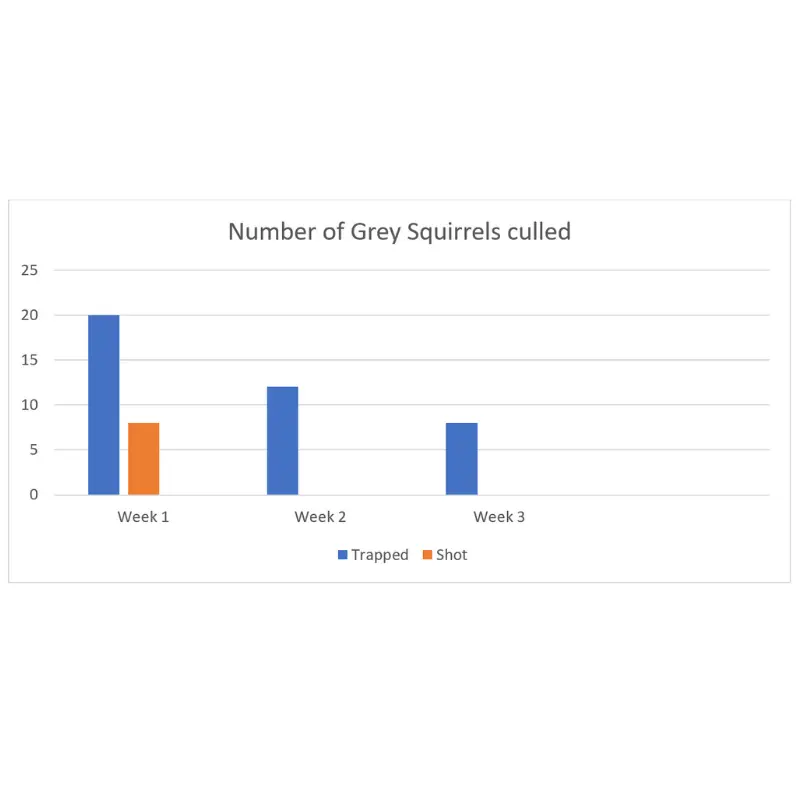
After the first week of trapping, we had managed to trap 20 squirrels in the trapping boxes as well as shooting 8, making our total for the week 28 squirrels dealt with, and this was a good start.
After the second week of trapping, we had caught and dispatched another 12 squirrels in the trapping boxes, and after the third week of trapping, we had trapped and dispatched a further 8 squirrels.
Canada goose management
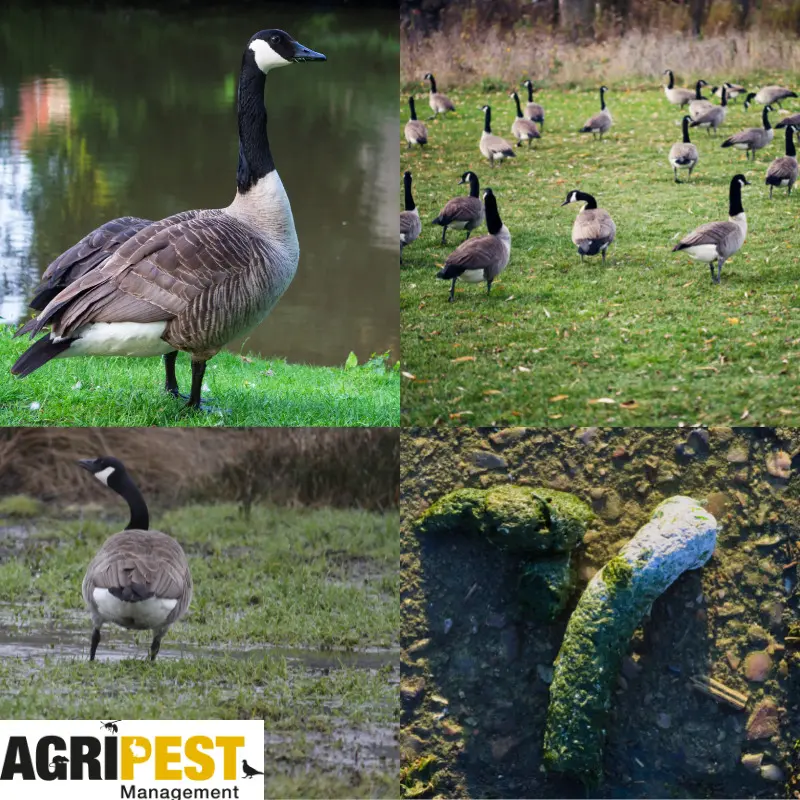
The main lake on the estate is home to a variety of birdlife including many Canada geese which are non-native to the UK. Canada geese are very large birds which can leave a large amount of droppings behind them, resulting in environmental contamination. Due to the large number of these birds being present on the lake, the large amount of dropping they were leaving was starting to pollute the lake, as well as making a mess of the land surrounding the lake, which was posing a risk to public health. For these reasons we were asked to control the number of geese on the lake.
Before going straight in and shooting the geese, we decided to try scaring the geese off the lake to try to move them on, and not have to use lethal methods of control, however these geese were used to the presence of people and scaring them off only proved to be a very temporary measure as they would simply fly off and circle the area for a bit, before landing straight back on the lake and carrying on as they were before.
We decided that the only effective way of reducing the number of Canada geese on the lake would be shooting, and this would be done legally under the general license, with the use of steel shot so as not to contaminate the environment.
We were successful with the shooting of the geese after managing to humanely dispatch 8 adult geese from the lake. This had a massive impact as not only had we removed some of the geese, but now the other geese were extremely wary and wise as to what was going on, and after this they had moved on from the lake and we have not seen many since other than the odd one or two which is a great result.
Rook control
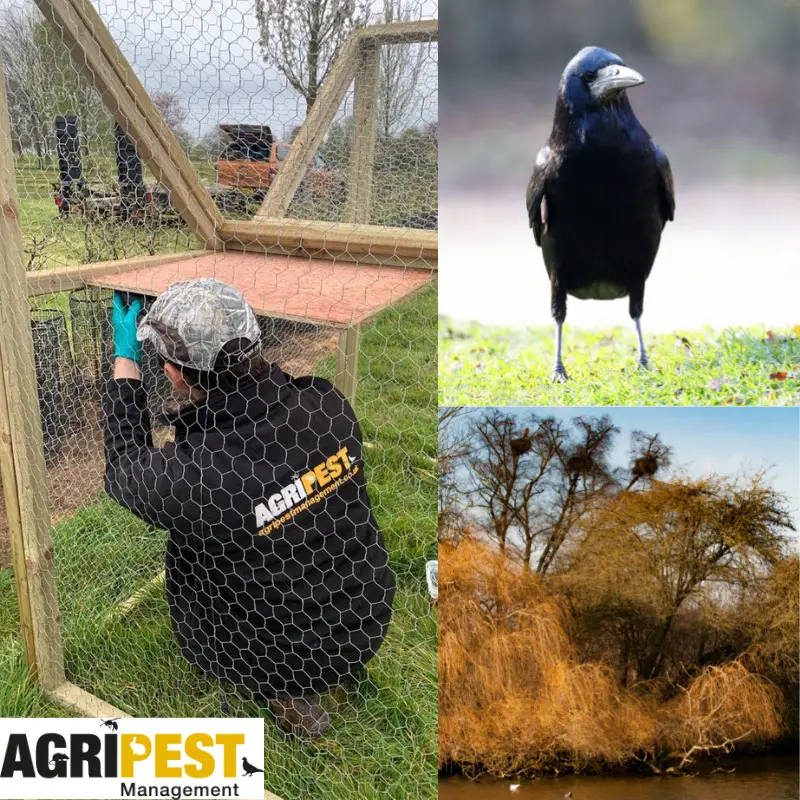
The estate woodland has a large rookery in the canopy of some of its trees which grows year on year. These rooks were becoming a nuisance on the estates arable land, causing crop damage due to the large amounts of rooks that are active in the area. We were asking if we could manage the number of rooks in the area to reduce the amount of crop damage that was occurring.
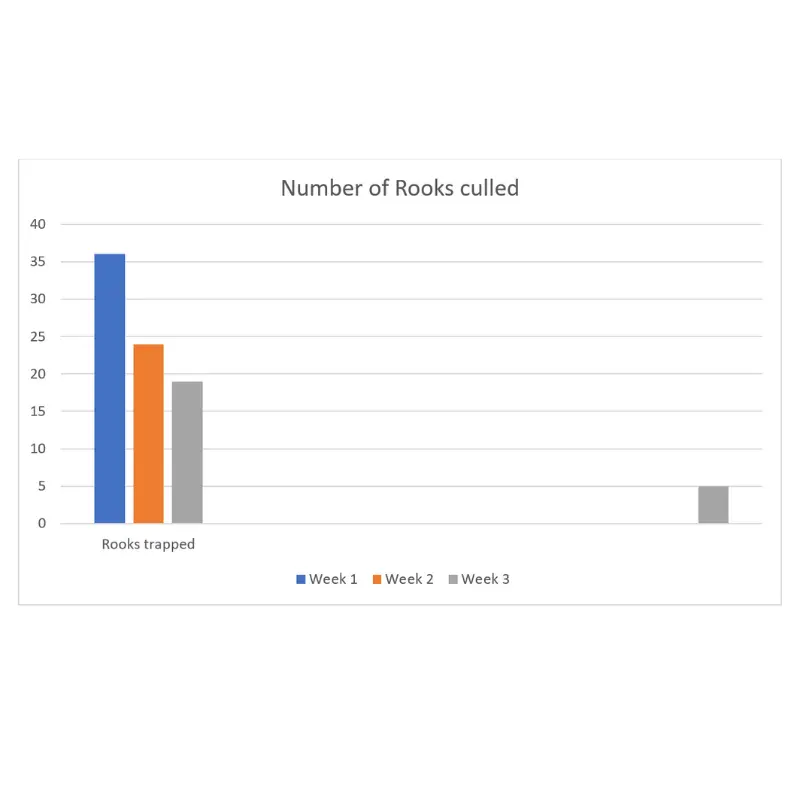
Because of the location of the rookery, shooting wasn’t really an option due to the fact that it was reasonably close to a road, so we decided trapping was the only option. We had previously had good results trapping rooks with the use of a ladder trap elsewhere, so we decided to set up a few ladder traps in the areas where the most crop damage was occurring. Ladder traps are very effective on rooks as you can catch large numbers over a short period of time, as well as having the ability to dispatch the birds easily and humanely within the trap. After the first week of trapping with the ladder traps we had trapped and culled 36 rooks which was a great start. By the second week we had trapped and culled a further 24 rooks, and by the third week we had trapped and culled another 19 rooks, taking our total to 79 rooks trapped and humanely dispatched over a three week period which made an impact on the number of rooks in the area and helped to reduce the amount of crop damage which was being caused in the area.
Deer management
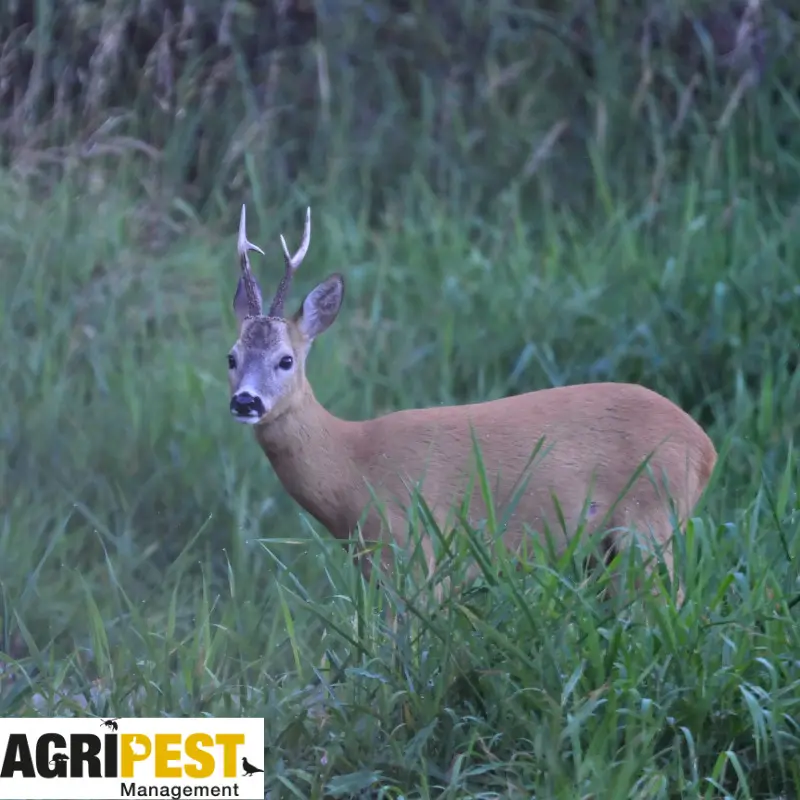
The estate has a population of roe deer that live within its grounds, and like anything else good management is required to ensure that the population remains healthy and that the numbers of deer don’t overpopulate the area, as this is when they can start to cause damage to crops and young trees.
AgriPest had been asked to manage the deer population on the estate as deer numbers had got quite large due to no previous deer management being carried out. The deer had started to spread throughout the estate and damage had been seen on quite a few of the sapling trees that had recently been planted, where the deer had nipped the tops off the saplings, killing or stunting the saplings growth.
The first thing we did was a deer count, where we recorded all the deer that we saw whilst travelling around the estate. We recorded how many we saw, the areas we had seen them and whether they were bucks or does. We also noted their body condition down so that we could monitor how they were doing, any deer that were in poor condition would be potential deer to be added to the cull list.
Because of the time of year, we were mainly focusing on the roe bucks, as they were the ones in season that were legal to cull. We had seen several bucks about that we had identified and decided that they were bucks we were going to cull. One of the bucks we culled was a malformed buck, which means that his antlers had grown in an abnormal way, potentially being a threat to other bucks during rutting so he was a buck that we culled for that reason.
Another buck we culled was a buck that was in poor condition. He looked as though he had an extremely tough winter and was very skinny so it was decided to cull him as we were worried that he wouldn’t put on enough body condition for rutting, and actually the amount of energy roe bucks use during rutting could well have killed him anyway, so it was a good call to cull him. We had also decided to cull several yearling bucks to help reduce the numbers of deer, as we knew there was good population of mature bucks in the area for breeding.
Mole control
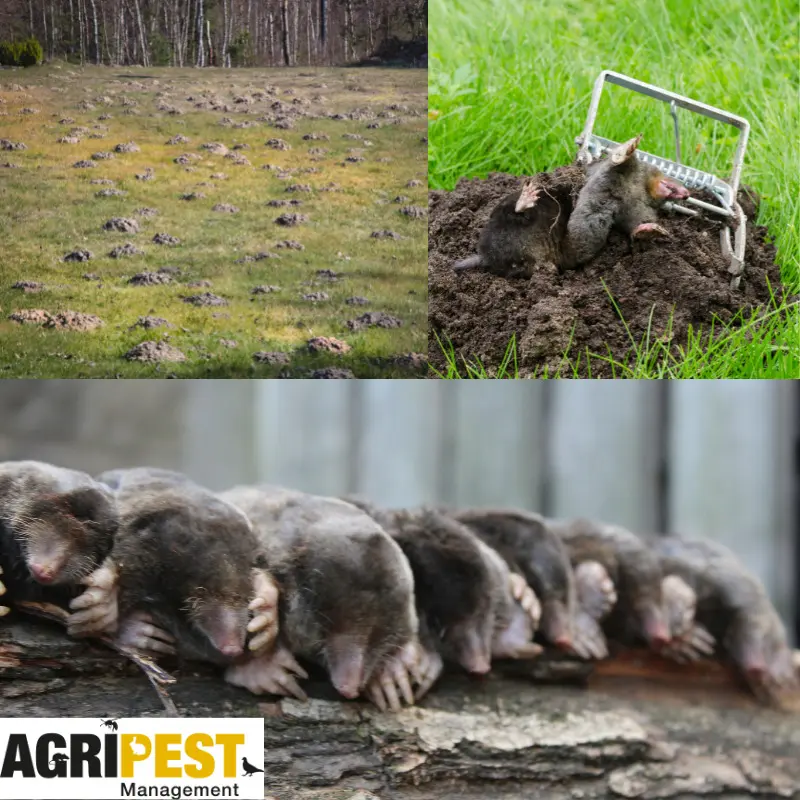
AgriPest Management carry out mole control in agricultural, domestic, commercial and estate/parkland settings, from small garden jobs to large scale mole clearance work. Recently we have been carrying out mole control on the estate, specifically in the parkland and garden areas where the moles had been making a mess of the well-kept grass. After a period where no mole control had been taking place, moles had reestablished themselves in certain areas and therefore needed controlling.
We used both Talpex and Duffus traps with brilliant results, managing to clear the problem moles in just three visits, with a total of 18 moles trapped and removed from the estate.
Summary
Managing estates is incredibly important to develop a healthy natural environment. It is about keeping a balance in nature as too many of one animal can have a detrimental impact on another. Too many predators in one area can greatly reduce survival rates of other animals in the area, but on the other hand, too little predators in an area could result in an overpopulation of animals due to high survival rates with no predation, and this is why we think it is very important to have plans in place to keep the natural balance in an environment.
Pest management and country estates go hand in hand, and the professional management of wildlife is essential to ensure a healthy ecosystem. Although we are pest controllers, we also see ourselves as conservationists, and we aren’t just out there to kill everything like a lot of people perceive pest controllers to be like. A lot of the work we do is to help certain species thrive in an environment where predators can have a detrimental impact on their survival rates, for example during certain times of the year we will carry out corvid control on crows and magpies with the use of Larson and Ladder traps, this is done to protect the nests and chicks of rare species of vulnerable ground nesting birds such as Curlew, Lapwing and plovers which the corvids can have a huge negative impact on if they didn’t go unmanaged. By carrying out this corvid control we can help to minimize the number of eggs and chicks that are raided by the corvids and ensure that ground nesting birds can successfully breed and produce future generations.
Deer management is also important to ensure a healthy population of deer in an environment. Like most animals, deer can breed rapidly in an environment where they are not controlled, and this can lead to unhealthy deer due to high competition for food i.e. too many deer in an environment that cannot sustain them with the natural resources present in the area, and therefore keeping the deer numbers well managed will ensure that the population is healthy with less competition for food, this will also benefit the flora in the environment as it will not be overgrazed/over browsed or damaged the same as it would if there was a high presence of deer in the area.
Too many deer in an area can also lead to large amounts of damage to crops and young trees/saplings which has an obvious negative impact on peoples livelihoods, and this is another reason why deer populations should be properly managed. As deer managers we help to ensure a healthy population of deer by selectively culling certain animals such as sick or poor conditioned animals, or bucks with such heads that could potentially injure other bucks during rutting activity.
Grey squirrel control is another aspect of pest management where we play a vital role in controlling the numbers of this non-native species whom have had huge negative impacts on our natural environment. Grey squirrels have reduced our native red squirrel numbers to the brink of extinction because greys carry squirrel pox which is fatal to our native reds. Greys are nearly twice the size of red’s which means that they outcompete them in every way. Unfortunately red squirrels have been completely wiped out because of greys in our area, and you would have to drive for hours to have the possibility of even seeing one in the wild, however that doesn’t mean that we cant do our bit by controlling the numbers of non-native grey squirrels as the control of them also benefits our natural environment due to the damage they cause to our native woodland.
AgriPest Management are one of the only pest management companies with the knowledge and experience to manage such a wide variety of pest species on such vast areas of land. We are fully equipped to carry out effective and professional pest management over large areas of land, specializing in estate and agricultural pest management, whilst at the same time helping to maintain a healthy and balanced natural environment.
Contact us today
nick@agripestmanagement.co.uk