Honey Bees
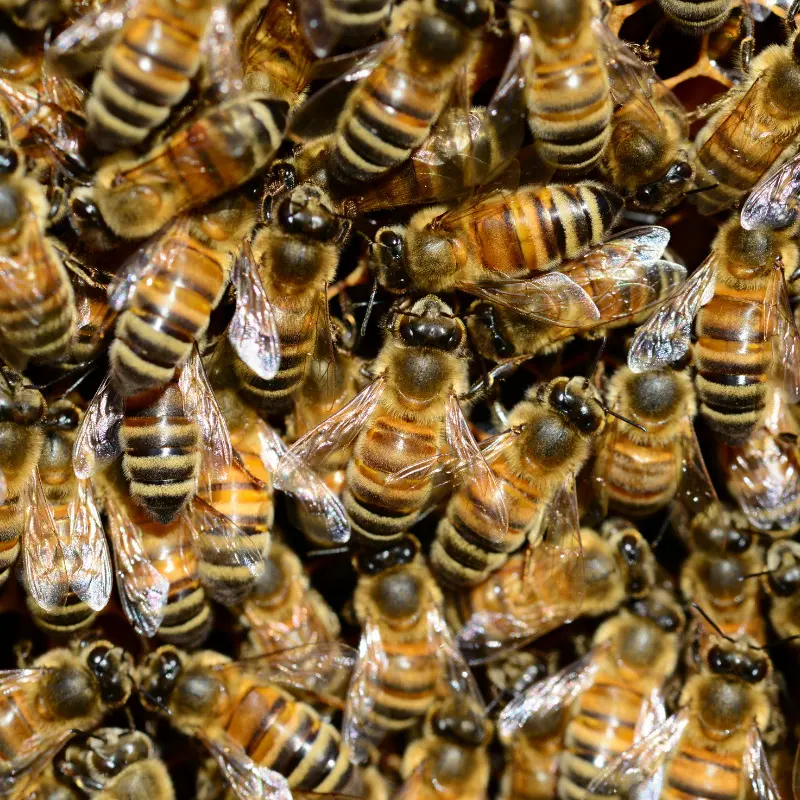 Here in the UK we only have one species of honey bee, the European or Western honey bee (Apis mellifera).
The European honey bee is the most widespread species in the world and has been domesticated by humans for around 5000 years. The nesting habits of the European honey bee make them an ideal species to be kept in hives by beekeepers.
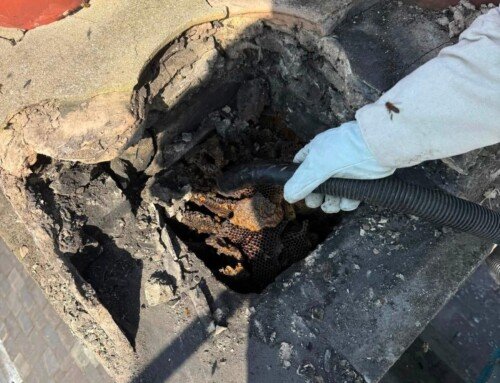
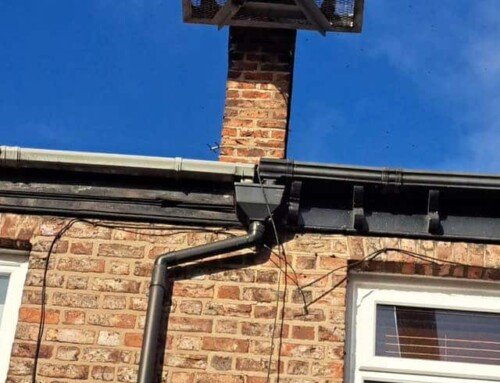
European honey bees prefer to build their colonies within cavities such as hollow tree trunks, in cavities in rock formations etc, and this is why they are commonly found in cavity walls, chimneys or under roof tiles in domestic settings, where they can become an issue.
How are honey bees identified?
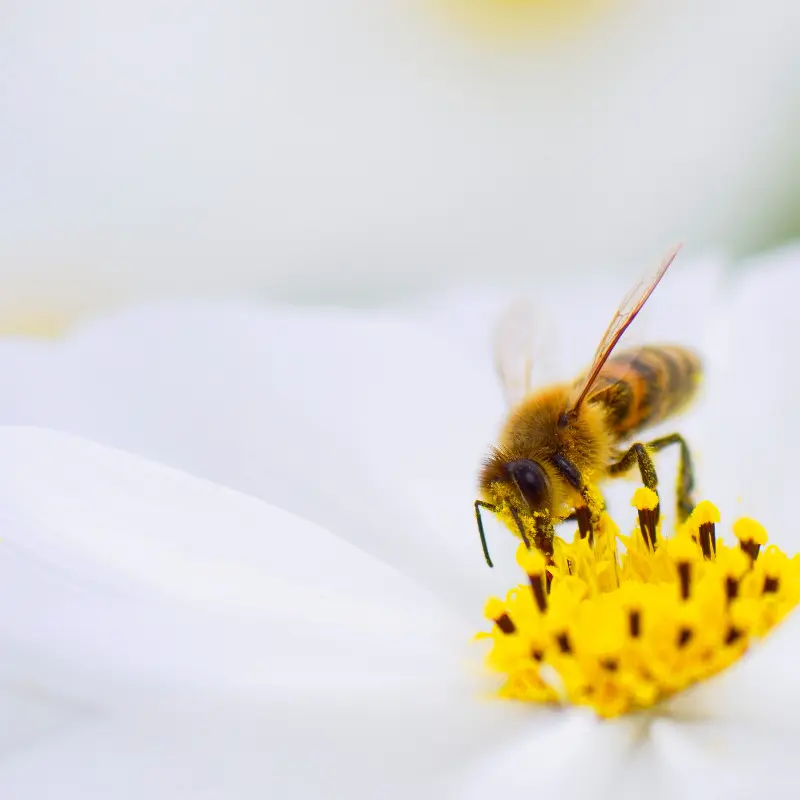
Honey bees are glossy yellow in colour with black stripes. They have a barrel-shaped body and differ from other insects as they do not have a thin middle section between their thorax and abdomen. Honey bees also have hair covering most of their body, although it is hard to see unless you look up close. Female workers and queen bees have small stingers protruding from their abdomen, male drones do not have these.
Honey bees are relatively small, workers are around 1.25cm in length and the larger drones can be up to 2cm in length.
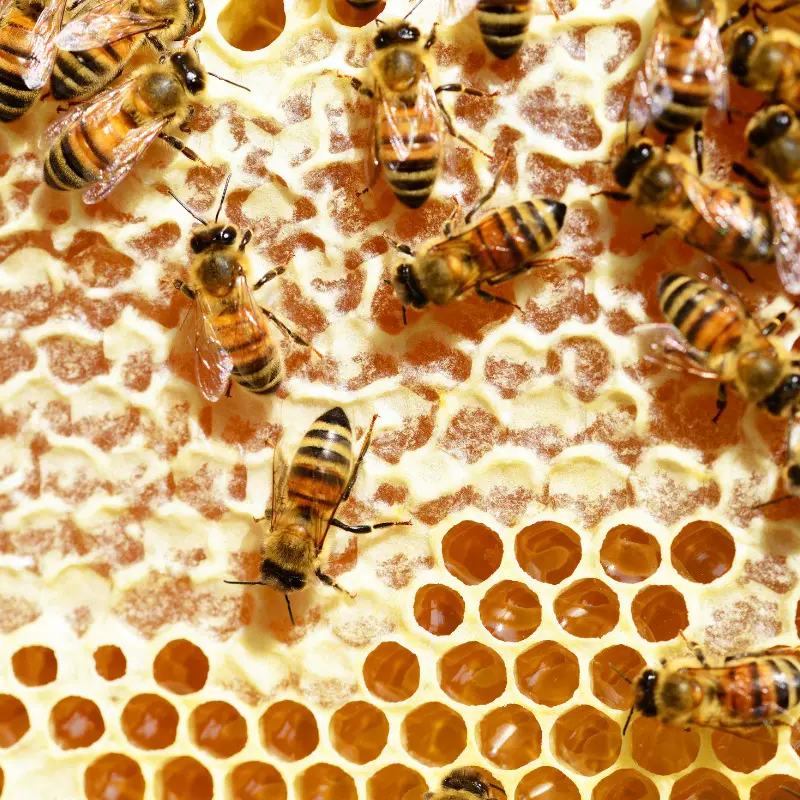
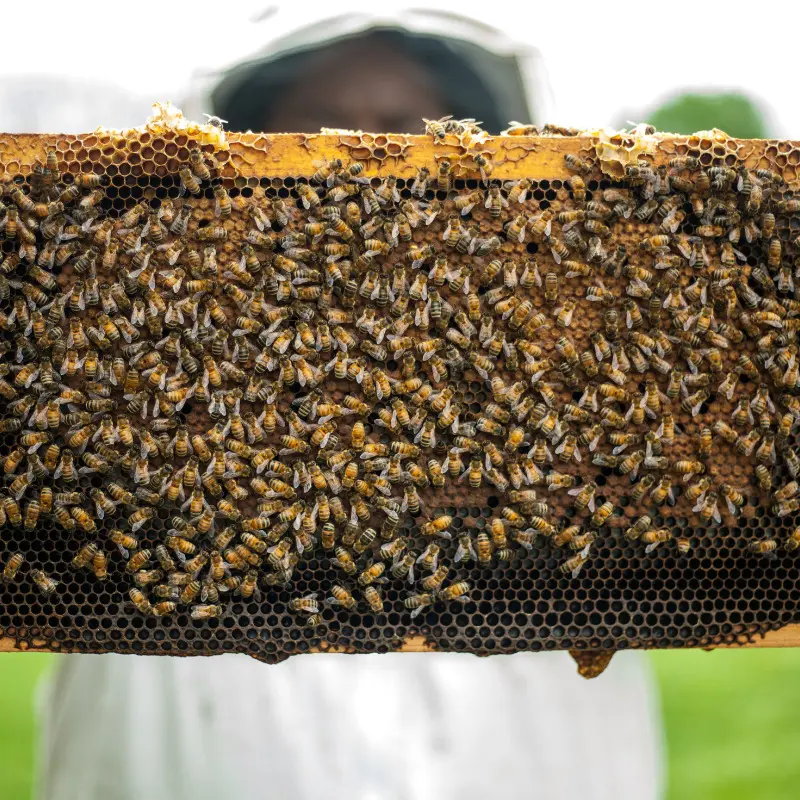
Honey bee colonies start with a swarm of bees. Within the swarm is a single fertile queen and thousands of worker bees who follow the queen until they have found a new nesting site to start a new colony. Once the queen has found an appropriate place to start the new colony, the workers will start constructing a new honeycomb. Honeycomb is made from wax which the worker bees secrete from special glands in their body. The bees chew the wax along with honey and pollen to produce beeswax, and this is what the honeycomb is constructed from. The honeycomb contains many cells and is used to store honey and as a place to raise young bees.
The queen will lay her eggs in individual cells within the honeycomb, she can choose whether to fertilise the egg or not, and this will determine what caste the bee will belong to. The caste is the social structure that all the honey bees follow, each hive member has different responsibilities to follow to ensure that the hive runs smoothly. A single queen bee can lay up to 1500 eggs each day!
Fertilised eggs will develop into female worker bees, whereas unfertilised eggs will develop into male drone bees.
After 3 days the eggs will hatch into larvae which are then cared for by the worker bees who feed the larvae with royal jelly to start with, they are then weaned off this and fed with honey and other liquids from plants. After 5 days of constant feeding and growing the larvae are ready to enter the pupal stage and are sealed in their individual cells with wax. During the pupal stage, the larvae start developing their wings, legs and eyes and after 12 days it has fully developed into a young adult bee. Female worker bees develop stingers, whereas male drone bees do not have stingers.
 Once the young bees have fully developed within their cell they will chew their way out and join the rest of the colony of bees. The new bee automatically knows its job role whether it is a worker, drone or new queen. Workers and drones are usually around 15mm in length, whereas queens are usually around 20mm. Queen bees begin their lives in the same way as workers and drones, however, queens are never weaned off royal jelly-like the workers and drones are towards the start of their lifecycle. Queen bees also develop a reproductive tract so they can mate with the male drone bees, whereas female worker bees are sterile and cannot reproduce. Any new queens that are produced are killed by the current queen of the hive.
There a 3 types of honey bees within a honey bee colony and each type of bee has a different job role.
-queens: a queen bee’s job role is to lay eggs to produce new bees for the colony.
-workers: the female worker bees do most of the work within the honey bee colony. Their jobs include housekeeping, feeding the queen, larvae and drones, collecting pollen and making wax for the honeycomb.
-drones: the male drone bees’ only job role is to mate with the queen. If a drone successfully mates with a queen he will die, many drones will never mate with a queen.
A honey bee colony contains one queen, hundreds of drones and from 20,000 to 80,000 workers depending on the size of the hive. The worker bees that construct the cells within the honeycomb are the ones who regulate the ratio of female worker bees to male drone bees. They do this by constructing smaller cells to produce female workers and larger cells to produce male drones. The queen will then lay her eggs according to the size of the cell if it’s a small cell she will lay a fertilised egg which will produce a female worker if it’s a large cell she will lay an unfertilised egg that will produce a male drone.
Honey bees are at their most active from spring until late autumn (April to October) It is at this time of year when the honey bee colony is foraging for pollen and nectar, and producing honey. The honey is used to feed the bees within the colony and is stored within the honeycomb in the hive. The bees need to ensure that they produce enough honey to last them over the winter months as they can’t produce honey in the winter due to the fact that no flowers are available to provide the nectar and pollen they need. Honey bees still remain active throughout the winter, however, they stay within their hive and huddle together, beating their wings to keep the hive at the correct temperature. They feed off the honey that is stored in the honeycomb to get them through the winter.
How do honey bees communicate?
 Honey bees can communicate in a variety of different ways. One of the ways bees communicate with each other is known as the round dance. The bees use this method of communication to let other bees know that they have located a nearby food source around 10 to 30 meters away from the hive. The round dance involves the bee moving in close circles, alternating right to left, this communication lets the other bees know the location of the food source.
Another method of communication is known as the waggle dance, this is a slightly more complex dance, the bees use this to communicate the location of a food source at greater distances from the hive. The waggle dance involves the bee moving in a figure of 8 motion, and the way the direction of the bee moves in relation to the hive indicates the direction of the food source to the other bees.
Other ways in which bees can communicate with each other is with the use of pheromones which they produce. Other bees can sense these pheromones. Worker bees at the hive entrance produce pheromones that will help other worker bees find their way back to the hive when they have been out foraging. Queens also produce pheromones known as queen substance. These pheromones let the whole colony know that the queen is in residence within the hive and will stimulate the worker bees’ activities. Queen pheromones also act as an attractant to male drone bees.
Other pheromones that bees can produce is an alarm pheromone that can trigger aggression from the colony such as when the hive is under attack from predators etc.
As well as the adult bees producing pheromones, the honey bee larvae and pupae can also produce pheromones. These pheromones help the worker bees to know the larvae’s gender, feeding needs and stage of development.
How is honey produced?
Many of the female worker bees’ job role is foraging. They leave the hive and go looking for flowers to collect nectar and pollen from. Each bee has nectar sacks on each of her hind legs, she will have to visit many flowers until she has found enough nectar or pollen to fill her nectar sacks. Once she has filled her nectar sacks the worker bee will return to the hive and deliver it to one of the other worker bees within the hive. The nectar is then passed mouth to mouth, and from bee to bee until the moisture content of the nectar is reduced from around 70% down to 20%, and this changes the nectar into honey.
Once the honey has been produced it is then stored in storage cells within the honeycomb and capped off with wax.
On average it can take 300 bees around 3 weeks to produce 450 grams of honey.
How long does each bee live for?
-Queen: 2-3 years.
-Worker: 5-7 weeks.
-Drone: 90 days.
What is swarming?
Swarming is the process in which a honey bee colony reproduces and starts a new hive. Once a colony gets to a certain size, the old queen will leave along with some of the worker bees in the form of a swarm. A swarm is a large number of bees consisting of the queen and a large number of workers. Swarms may seem scary to some people, however, they are harmless, it is basically just the bees going to start a new hive somewhere else. The worker bees will follow the queen bee until she finds somewhere suitable to start a new hive.
What happens to the old hive?
 Many of the old workers and drones stay within the old hive, however, the old hive will now need a new queen to start laying eggs and producing new bees. New queens are produced via fertilised eggs which develop into female bees. These bees are fed on a diet of royal jelly only to produce new queens. The next new queen to hatch within the hive will become the new queen, she will then kill any other new queens that emerge. If more than one new queen emerges at a time, they will fight to the death and the surviving queen will become the new queen.
The new queen will then breed with some of the male drones until she is fertilised and then once fertilised she will start laying eggs and continue the lifecycle and the hive will carry on growing in size.
Bees are extremely important as they are the world’s most important pollinator of food crops, as well as pollinating other plants, flowers and trees. They also produce the honey which many of us humans love to consume as well as other bee products such as beeswax.
In general, they are harmless if they are left alone and undisturbed, however, they are times when the honey bee can actually become a pest within the domestic environment and it is then necessary to interfere and remove and relocate the hive to a safer location, that’s where Agripest come in!
Although bees are nice to have around, they can sometimes end up building their hives within cavity walls, chimneys and under roof tiles within people’s homes, and this is where they can cause issues.
Honey produced by the hive can drip down and cause staining to ceilings, walls etc. As well as this, honey bee hives can become extremely large and heavy, this can potentially cause ceilings to collapse under the weight of them.
Having a honey bee hive within your home can also bring with it other pest species such as fruit flies, ants, moths and lice which can quickly become a problem in themselves.
Another reason why having a honey bee hive within your home can be a risk to your health is the fact that some colonies can become aggressive when disturbed, and this can result in people getting stung multiple times. Although it is not pleasant getting attacked by a swarm of angry bees, for some people it can become a massive risk to their health if they are allergic. An allergic reaction from a bee sting can lead to large swelling around the sting area, anaphylactic shock and in bad cases possible death.
Unlike wasp nests which will only last one season, a honey bee colony will continue to grow year on year, so if left alone it will continue to grow to massive sizes as the years go on. The longer the colony is left to grow the heavier the hive will get and the more honey it will have produced, and in turn, the more possible damage that the hive might have caused to your property. For this reason, Agripest recommends that you contact a professional such as ourselves to come out and safely remove and relocate the honey bee hive from your property. Honey bee hive removals do not involve killing the bees, it simply involves removing the full colony of bees along with the honeycomb they have produced. We then relocate the bees and their hive to one of our own honey bee hives where they will continue to live their lives undisturbed in rural North Yorkshire.
European Tree Bees
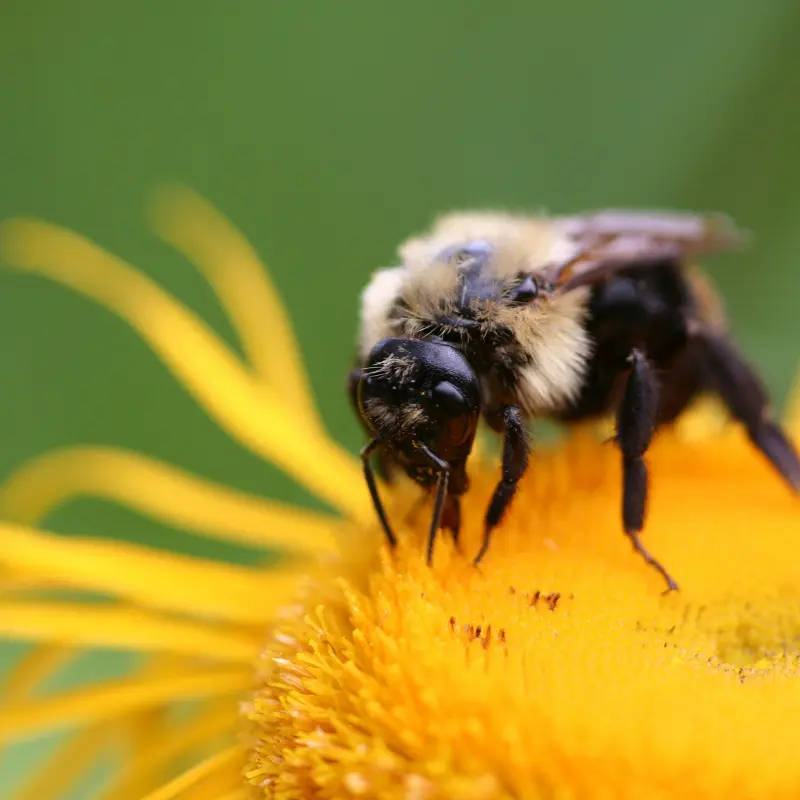 Tree bees (Bombus hypnorum) are a type of bumblebee that often choose to build their nests within the roof space of domestic properties. They can also be found nesting in other areas such as in bird boxes. In the wild tree bees build their nests within holes in trees hence their name, they will also exploit other nooks and crannies such as gaps in rocks and even holes in the ground, etc.
Tree bees are a woodland species and are commonly found in areas near to or surrounded by woodland. They rely on woodland habitat as it provided the food source which the bees feed on such as the flowers of fruit varieties like raspberries, blackberry, black current, gooseberry, apple, etc. They will also feed on other species of flowers as well as heather.
The tree bumblebee is usually one of the first bumblebee species to be seen in the springtime. They are easily identified with their colour patterns, the thorax is usually tawny to reddish-brown colour, the abdomen is black and the tail is white. They are the typical bumblebee shape but can vary in size from very small to quite large. Queens, workers and drones all have a similar colour pattern, however, the 3 types of bees differ in size. Workers are generally the smallest of the 3 types, queens and drones are often fairly large.
Tree bumblebees are active from March to July, in late July the majority of the bees in the colony will die off, and the new queens will leave the nest to find somewhere to hibernate until the following season when they will emerge to start a new colony.
A tree bee colony starts with a single queen. Once she has located somewhere she finds suitable, she will first lay eggs that will produce new worker bees, once these new worker bees have developed it can take up to 6 weeks before they will leave the hive and start foraging. The workers vary in size and it is usually the larger workers who leave the hive to forage for food, the smaller workers will stay in the nest all the time and these are known as house bees, the house bees main job is to take care of and feed the larvae as they develop into young bees.
Tree bee colonies rapidly grown in numbers as they have a short season compared to other bee species, however, the colony size remains relatively small in comparison to honey bee colonies. A tree bee colony can build their colony up to around 400 bees for a large colony, however, many colonies will be much smaller in numbers, colony number will depend on the available food source that the bees have access to.
As the season progresses, the colony will start to produce drones which are male bees, these drones are produced by the queen laying unfertilised eggs. Drones often grown much larger than workers and their only purpose is to breed with the new queens that the hive will soon produce.
Next, the nest will start producing new queens. These new queens will be the bees that will breed with the drones and start a brand new colony the following season. New queens are produced by the queen laying fertilised eggs, once these eggs develop into larvae they are fed on a diet of royal jelly only, this differs from the other bees in the nest who are only fed royal jelly at the start of the cycle, they are soon weaned onto a diet of honey and other plant liquids.
During May and June time tree bee colonies start swarming around the nest location, this can be alarming for some people as large numbers of bees can be seen buzzing about and the noise can be very loud, however, there is no need to be concerned because all that is happening is the male drones are waiting for the new queens to emerge from the nest. Once the new queens emerge, the drones will mate with them and this will make the new queens fertilise. Shortly after breeding the drones will die. After breeding the new queens are now fertile for the rest of their life and capable of rearing new generations of tree bees.
Shortly after swarming occurs the new queens will leave the nest and find somewhere to hibernate until the following season when they will emerge to start a new nest. The workers will be left behind and will die off, eventually leaving an empty hive. Tree bee nests only last one season and are only active for around 5 months of the year.
What does a tree bee nest look like?
Tree bee nests are very different in appearance compared to honey bee hives and are not as neat and tidy. They do not construct honey comb like honey bees do and they do not produce honey in the large quantities that honey bees produce.
Instead, tree bees construct small circular pods that are brown in colour, these pods contain very small amounts of honey that the tree bees produce as a food source. These pods are sticky to touch and smell sweet due to the small amount of honey that is contained within them.
Tree bee nests are quite small, however, they are easy to identify if exposed and will appear as a ball of the pods stuck to one another.
Tree bee nests are often found in bird boxes where they use old bird nests or even evict small birds from the nest so that they can use the bird nest as their own nesting site. Their nests can also be found in sheds, compost heaps, plant pots, in trees and bushes, in the ground and also commonly found in roof spaces under loft insulation, or within cavity walls.
How can tree bees become a pest in a domestic environment?
Although tree bee colonies are short-lived, and the bees are relatively harmless, they can often decide to build their nests within the roof spaces of houses, as they tend to take a liking to loft insulation which they commonly construct their nests under.
It is here where they can cause a nuisance as a tree beehive can be quite loud due to the vibration and movement of hundreds of bees within the roof space.
People will often hear strange noises and vibrations coming from the loft space and it is often tree bees who are the culprit. These loud noises can become a nuisance to homeowners, especially during the night when they are trying to sleep and all they can hear is vibration noises coming from the roof space.
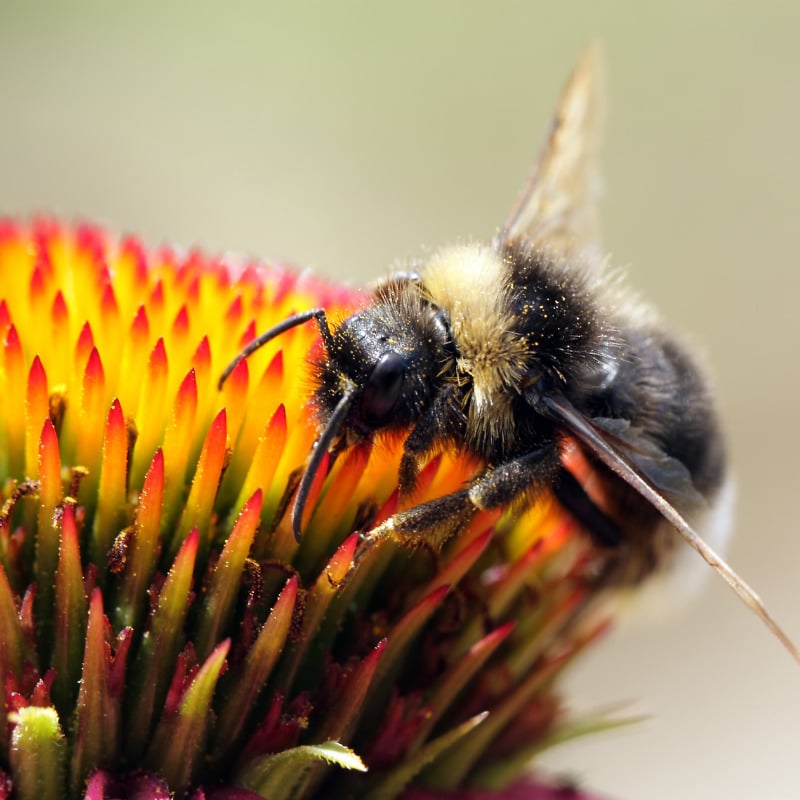 Another way in which tree bees can become a pest in the domestic environment is the fact that they can become aggressive if disturbed. They are very sensitive to vibration and if their nest is accidentally disturbed by a person or pet who doesn’t know they are there, the bees can think the hive is under attack and they will respond in an aggressive manner, this often results in getting stung often multiple times which is not pleasant, especially in an environment where children or pets may be present.
How can Agripest help with tree bees?
Here at Agripest, we believe tree bees are important as they are pollinators of many native plant species. If left alone tree bees pose little risk and are generally docile unless disturbed. A tree bee nest is only active for 5 months of the year and therefore aren’t around for long.
We also know that there are times when a tree bee nest can become a nuisance within the household and also a risk to the health and safety of children and pets if the nest is in close proximity to a property. It is under these circumstances that it is necessary to remove and relocate the tree bee nest.
This is a process that is done safely and professionally and does not harm the colony. It involves the whole nest along with the bees in the colony been lifted out of the location and carefully placed in a breathable container. Tree bee nests are small in comparison to honey bee hives so the process is much more simple and doesn’t take long at all.
After the tree bee nest has been safely removed we then relocate the nest to a safe environment where the bees are left to live out the rest of their cycle and produce the next generation of tree bees the following season.