The Grey squirrel (Sciurus carolinensis) is a common rodent native to North America.
They are an invasive species originally not native to the UK, however they were released into the UK by the Victorians in 1876 as ornamental additions to high class estates.
 The average grey squirrel is around 24-28cm in length with a tail length of around 19-24cm. They can weigh anywhere from 400-650grams. The average lifespan of a grey squirrel in the wild ranges from 2-5 years.
A male squirrel is known as a boar and a female is known as a sow, and young squirrels are known as kits.
A female grey squirrel or sow can breed from the age of 10-12 months old. After a gestation period of 44 days she can have a litter of 3-4 kits. A female grey squirrel can have up to 2 litters a year in early spring/summer. The female will lactate for up to 10 weeks, however squirrel kits will start to eat solid food at around 8 weeks of age.
The most common place to find grey squirrels is in woodland as this is their natural habitat. They live in ball shaped nests known as dreys which they construct from twigs, these dreys are often high up in the tree canopy where the squirrels feel safe. As well as this, grey squirrels will also exploit holes in tree trunks etc to live in.
Grey squirrels feed on a wide variety of natural food sources such as chestnuts, walnuts, seeds of trees such as oak, beech and hazel, pine cones, fungi and even eggs and young birds which they steal from birds nests. It is also common for them to feed from bird feeders in domestic gardens.
Grey squirrels are usually at their most active in early morning and late afternoon, however they can be seen throughout the day.
Why are grey squirrels a pest species in the UK?
-Grey squirrels are a huge pest in woodland where they strip the bark of thin barked tree species which can kill the tree or distort the trees growth. It is estimated that grey squirrels cause £14 million in damage per year to the timber industry.
-Grey squirrels pose a huge threat to our native red squirrels by out competing them for food and habitat. As well as this, grey squirrels carry the squirrel pox virus which is lethal to red squirrels. Because of this, grey squirrels have driven red squirrels to localised extinction in the majority of the uk.
-Grey squirrels cause damage to many song bird species by taking their eggs and young chicks from the nest. It is estimated that grey squirrels reduce song bird fledging rates by an average of 15%.
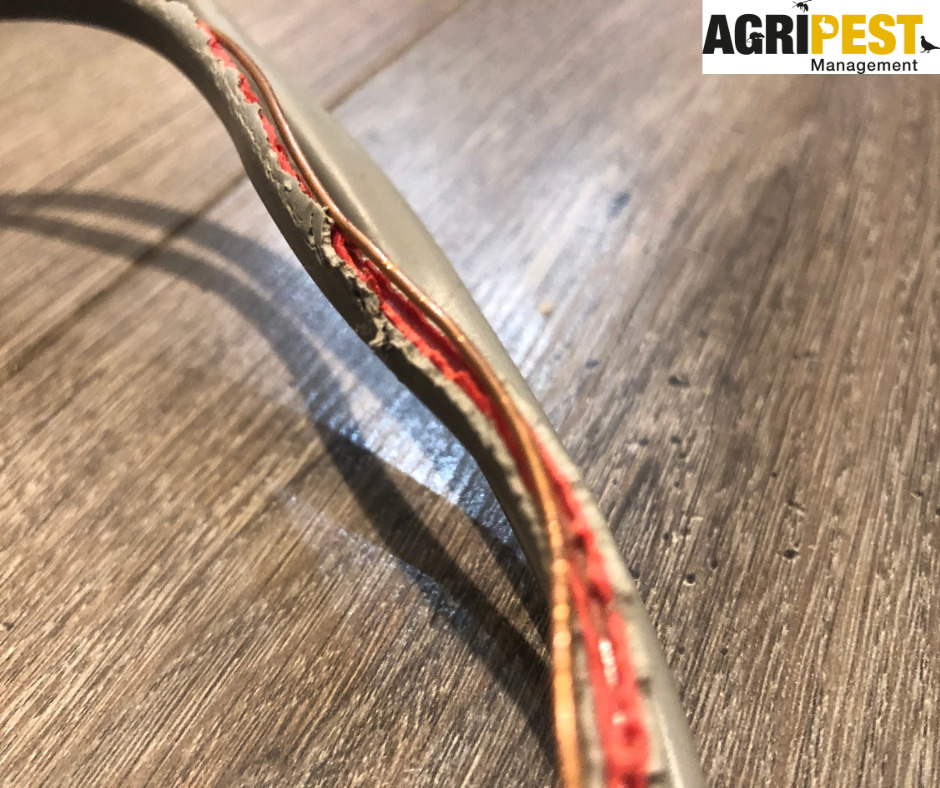
-Grey squirrels can cause a huge amount of damage if they gain access into your homes/buildings. They often end up in roof spaces causing huge amounts of damage to timbers, pipes and wiring and pose a huge risk of fire due to chewing electrical cables. They also cause damage to insulation which they often rip up to build their nests with, as well as contaminating the roof space with droppings and urine which in turn creates an awful smell in the roof space.
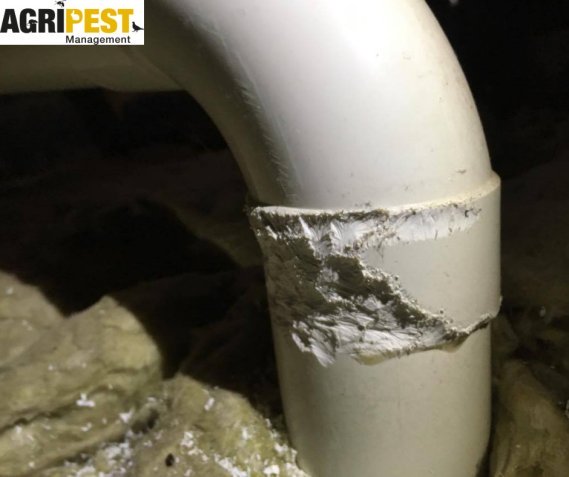
Grey squirrels commonly enter houses and buildings to find shelter and build a nest to rear their young. What can start as 1 female squirrel can soon turn into 4 or 5 squirrels as the female could rear up to 4 kits. All of this can result in a huge amount of damage to the buildings structure, insulation, pipes and wiring as squirrels constantly gnaw to keep their teeth short and sharp. It is also common for squirrels to return to the same building/nesting site year on year.
What are the signs of Grey squirrels living in a roof space?
The signs of squirrels living in a roof space are normally very obvious. They are very active early morning and late evening so it is very common to actually hear the sound of squirrels moving around and gnawing in the roof space, they can be really loud!
Another sign of squirrels is gnawing damage. Squirrels constantly gnaw timbers, pipes, wiring and plasterboard within the roof space which is usually quite obvious to see.
Other visual signs of squirrels include their droppings which are usually up to an inch in length and a brown colour. They look very similar to rat dropping, however they differ from rat dropping as they are rounded at the ends. Old squirrel dropping can often turn white after a period of time.
Piled up insulation is a sigh of a squirrel nest. They will chew up and make piles of insulation that will serve as a nest for their young.
Another obvious sign that grey squirrels have been living in a roof space is the strong smell of their urine which is usually extremely obvious in an area where squirrels have been present for a long period of time.
How do we control Grey squirrels?
-The main methods of grey squirrel control include shooting and trapping.
Shooting is an effective method of control as it is selective in the fact that you know what you are dispatching, however this method is dependent on the environment and is not an option in certain environments. For shooting squirrels we most commonly use 22lr rifles, 410 or 12 bore shotguns and air rifles for close up squirrel control.
Trapping is the most common form of control for grey squirrels and is carried out throughout the UK. The most commonly used traps are approved spring traps (in areas where red squirrels are not present) or live catch traps- these are more commonly used in areas where red squirrels may be present, and if one was to be caught it can safely be released. Spring traps can’t be used in areas where red squirrels are present as there is the risk of accidentally catching and killing a protected red squirrel which is illegal!
When using live catch traps there is still the task of dispatching the grey squirrel once it is caught in the trap as it is illegal to release it in the UK due to the grey squirrel being an invasive/non native species. Dispatching grey squirrels in live catch traps is often done with the use of an air rifle or air pistol with a humane shot to the brain.
Spring traps are instant kill traps designed to dispatch the squirrel when they are triggered. They have to be an approved spring trap and by law they should be checked at least once every 24 hours (we recommend checking them twice each day, in the morning and in the evening). It is important to regularly check spring traps because there is always the small risk of the trap catching the squirrel by a leg or arm which obviously wouldn’t be fatal for the squirrel so it would have to be humanely dispatched to prevent the squirrel suffering.
 By law spring traps must be used in conjunction with either an artificial or natural tunnel to prevent non target species from gaining access to the trap. The tunnel should only be the correct size for a squirrel to be able to enter.
The tunnel can simply be constructed out of wood in a rectangular shape, allowing enough height within the tunnel for the trap to be set and triggered without hitting the roof of the tunnel as this could result in an in humane kill.
Alternatively, a natural tunnel could be used such as a tunnel constructed from stones/bricks etc.
Purpose built tunnels designed for trapping squirrels can also be purchased from various online shops.
The most common types of spring traps used to control grey squirrels in the UK include:- -Fenn mk4 & mk6 -BMI magnum 55, 110 and 116 -Kania 2000 and 2500
Other types of approved spring traps are also available for use on grey squirrels, if you are not sure whether a trap is legal to use or not, check the uk spring trap approval order as this states what traps are legal to use for the control of grey squirrels in the UK.
In conclusion, Grey squirrels are a formidable pest species in the UK, they can cause large amounts of damage to houses and buildings if they gain access costing property owners potentially thousands of pounds in damages.
As well as this grey squirrels pose a huge threat to our native woodlands and wildlife. They are responsible for the near extinction of our native red squirrels in certain areas which is obviously a huge loss of this well loved, iconic species.
For these reasons we believe it is extremely important to control the invasive Grey squirrels wherever possible.